-

Top 1% of Defence Law Firms
-

Defended over 50,000 Cases
-

5 star google reviews
-

40 Years of Criminal Law Expertise
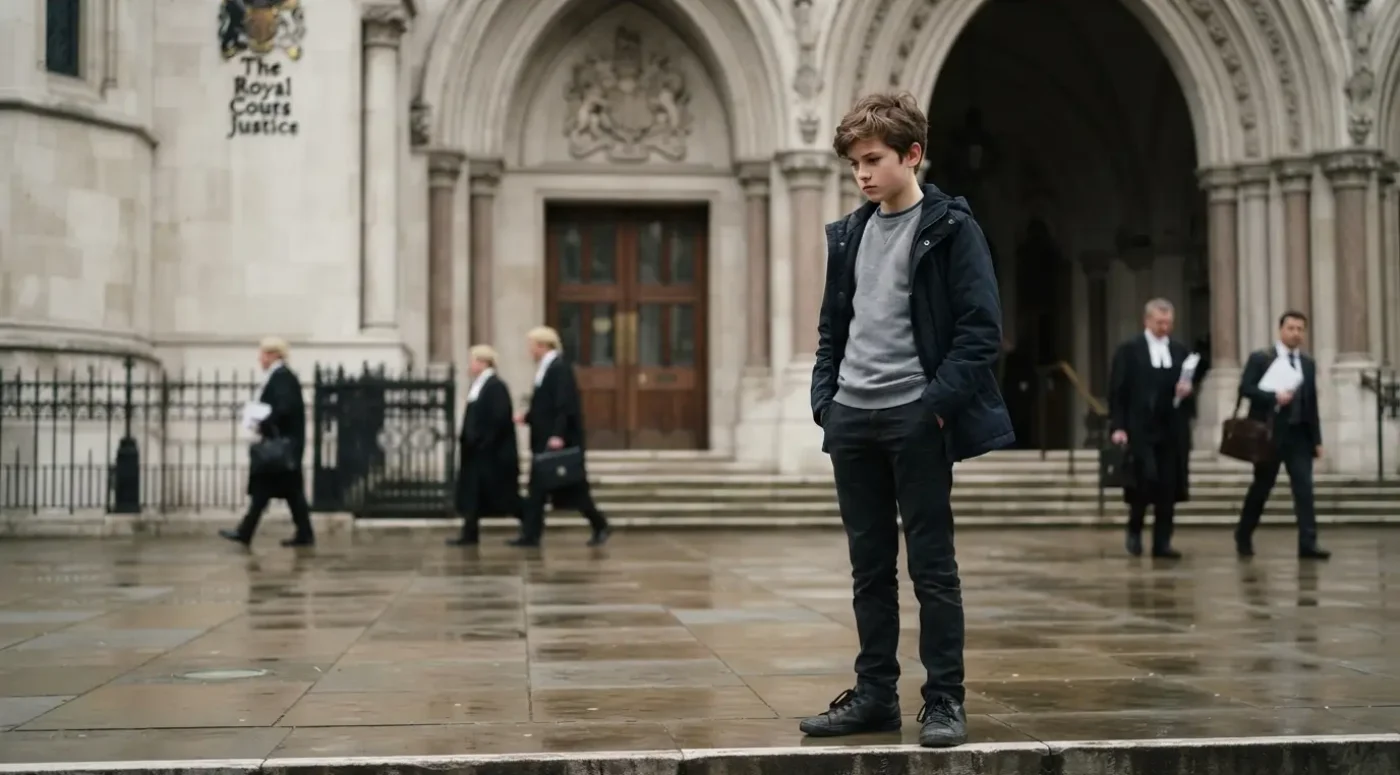
The age of criminal responsibility is the minimum age at which a person can be arrested, prosecuted and convicted of a criminal offence. It is sometimes called the minimum age of criminal responsibility, or MACR.
The principle behind it goes to the heart of English criminal law. Almost every offence requires two elements:
- the actus reus — the prohibited act or omission
- the mens rea — the guilty mind, or criminal intent
The argument for a minimum age is that a child below a certain point in their development cannot properly form criminal intent, cannot appreciate the seriousness of what they have done, and cannot meaningfully participate in a criminal trial. Punishing them is therefore neither fair nor useful.
In England and Wales, the threshold is set by section 50 of the Children and Young Persons Act 1933, as amended by the Children and Young Persons Act 1963. The 1933 Act originally fixed it at eight; the 1963 Act raised it to 10, where it has stayed for over sixty years.
The age of criminal responsibility across the UK
Criminal justice is devolved, so each jurisdiction sets its own threshold.
| Jurisdiction | Age | Legal basis | Status in 2026 |
|---|---|---|---|
| England | 10 | s.50 Children and Young Persons Act 1933 (as amended 1963) | Under active review |
| Wales | 10 | Same as England (criminal law not devolved) | Senedd pressure to devolve and raise |
| Northern Ireland | 10 | Children and Young Persons Act (NI) 1968 | Consulted on raising to 14; not legislated |
| Scotland | 12 | Age of Criminal Responsibility (Scotland) Act 2019 | Raised from 8 in December 2021; further review completed |
At 10, England, Wales and Northern Ireland have the lowest minimum age in Europe. Most comparable European jurisdictions sit at 12, 14 or higher Germany at 14, Sweden at 15, Portugal at 16.
What happens if a child under 10 breaks the law?
A child under 10 cannot be arrested, charged, prosecuted or given a criminal record. That does not mean nothing happens. Several routes remain open.
Safeguarding, not prosecution
In practice, the primary response is a welfare one. Police returning a child home will typically speak to parents and refer the matter to the local authority’s children’s services team. Local authorities have duties under the Children Act 1989 to provide services to children in need (section 17) and to investigate where a child may be suffering significant harm (section 47). Police also have short term protection powers under section 46 of the same Act.
The thinking is straightforward: a seven-year-old setting fires or seriously assaulting another child is almost always a child with unmet needs, and a social work response is more likely to change the outcome than a criminal one.
Child Safety Orders
Under section 11 of the Crime and Disorder Act 1998, a local authority can apply to the family court for a Child Safety Order in respect of a child under 10. The court can make one where, among other conditions, the child has done something that would have been an offence had they been 10 or over.
The order places the child under the supervision of a responsible officer usually a social worker or youth justice worker and imposes requirements designed to prevent further harmful behaviour. It can run for up to twelve months. It is a civil order made in the family court, not a criminal conviction.
Local Child Curfews no longer exist
This is worth flagging because a great deal of online content, including some legal guidance, still lists Local Child Curfews as a disposal for under-10s.
They were introduced by the Crime and Disorder Act 1998 and would have allowed a local authority to ban children from public places between 9pm and 6am unless accompanied by an adult. In practice the power appears never to have been used, and it was repealed by the Policing and Crime Act 2009. If you see it cited as current law, the source is out of date.
Civil injunctions under the Anti social Behaviour, Crime and Policing Act 2014 are available from age 10, not below.
What happens to a child aged 10 to 17?
Once a child turns 10 in England and Wales, the full criminal process becomes available though it is meant to operate differently from the adult system.
Out of court resolutions deal with the majority of cases and avoid a court appearance altogether:
- Community resolutions — informal, often involving an apology or reparation
- Youth cautions — a formal warning, recorded but not a conviction
- Youth conditional cautions — a caution with attached requirements
In court, most cases are heard in the youth court, a specialist magistrates’ court that sits in private with adapted procedure. Sentencing options include:
- Referral orders — the most commonly used disposal, lasting three to twelve months, involving a contract agreed with a youth offender panel
- Youth Rehabilitation Orders (YROs) — community sentences of up to three years, which can attach curfews, supervision, education, mental health treatment or electronic monitoring
- Fines — capped at £250 for children aged 10 to 13 and £1,000 for those aged 14 to 17, and payable by a parent or guardian where the child is under 16
- Detention and Training Orders (DTOs) — custodial sentences of four to 24 months. Critically, a DTO cannot be imposed on a child under 12, and is only available for 12 to 14 year olds who are classed as persistent offenders
For the most serious matters “grave crimes” carrying an adult maximum of at least 14 years, plus certain sexual and firearms offences a child can be sent to the Crown Court and sentenced under section 250 of the Sentencing Act 2020. A child convicted of murder receives detention at His Majesty’s Pleasure.
So while a 10 year old can in theory be convicted, the practical routes into custody for the very youngest children are narrow. That distinction is central to the reform debate.
Youth offending in numbers:
The Youth Justice Board published its statistics for 2024/25 on 29 January 2026. The long term direction is unmistakable.
Fewer children are entering the system than ever before:
- Around 8,100 first-time entrants a record low, down 4% year on year
- Roughly 13,000 children cautioned or sentenced in 2024/25, against almost 107,000 in 2009/10
- Around 58,300 arrests of children, down 2%
- Stop and searches down 7%, to about 95,900
Custody is at a record low:
- An average of around 420 children in custody at any one time, down 3% the lowest ever recorded, against roughly 2,800 in 2003/04
- Around 610 custodial sentences, down 7%
But the picture is not uniformly positive:
- The average time from offence to case completion reached 230 days, matching the worst delays seen during the pandemic
- 62% of children remanded to custody did not go on to receive a custodial sentence
- The reoffending rate fell to 31.8%, but those who do reoffend are doing so more frequently than at any point in a decade
- Black and Mixed Heritage children remain significantly over-represented at every stage, from stop and search through to custody
The Bar Council’s June 2026 report added figures that go to the heart of the argument. In the year to March 2025 there were just 233 first time entrants aged 10 to 12, of whom only one received an immediate custodial sentence. Of 1,590 children aged 10 to 14 found guilty of offences that year, 22 received immediate custody.
Where reform stands in 2026
Momentum has built rapidly. Here is the sequence.
December 2021 — Scotland’s Age of Criminal Responsibility (Scotland) Act 2019 came fully into force, raising the threshold from 8 to 12.
December 2024 — Scotland’s Age of Criminal Responsibility Advisory Group recommended a further increase, to 14 or above.
December 2025 — The Scottish Government laid its statutory review before the Scottish Parliament. It accepted that a further increase is possible and would strengthen Scotland’s child rights position, but did not commit to change, saying more evidence gathering and public consultation would be needed first.
January 2026 — The Senedd held a short debate on raising the age to 14 in Wales, alongside arguments that the power should be devolved. The Thomas Commission had previously found 10 too young.
February 2026 — An amendment to the Crime and Policing Bill, which would have replaced “ten” with “14” in section 50 of the 1933 Act, was debated at Lords committee stage. It was tabled with support from Baroness Hale of Richmond, Baroness Butler-Sloss and the Bishop of Manchester. It was withdrawn after debate, with no vote taken.
18 May 2026 — The Ministry of Justice published its Youth Justice White Paper, Cutting Youth Crime. Changing Young Lives. On the minimum age, it commits the government to carefully consider the Bar Council’s review of whether the current threshold remains appropriate. The wider package includes:
- Piloting Youth Intervention Courts bringing judges, youth justice services and specialist support together
- Cutting custodial remand for children by 25% this Parliament, with £5m for community alternatives
- Strengthening and expanding Parenting Orders, use of which fell from over 1,000 in 2009/10 to 33 in 2022/23
- Consulting on childhood criminal records reform by the end of 2026, potentially ending lifelong disclosure for childhood offences
- Reforming out-of-court resolutions, with proposals in autumn 2026
- A fundamental review of the criminal courts for child defendants, reporting by August 2027
- An extra £15.4m a year for the Turnaround early intervention programme
28 June 2026 — The Bar Council published Reviewing the minimum age of criminal responsibility, recommending an increase from 10 to 14. The Law Society, the Children’s Commissioner for England and the Law Commission indicated support.
Northern Ireland — The Department of Justice consulted in late 2022 on raising the threshold from 10 to 14 and published responses in 2023. Legislation has not followed, principally because of the absence of cross-Executive agreement.
The bottom line: as of August 2026, nothing has changed. The age of criminal responsibility remains 10 in England, Wales and Northern Ireland, and 12 in Scotland. But the government has, for the first time in many years, opened the door rather than closed it.
My child has been arrested: what to do right now
Reform debates matter, but they do not help a family whose child was arrested this week. The law as it stands is the law that applies to your case today.
If your child is 10 or over and has been arrested or is being questioned by police, the next few hours matter more than any other stage of the case. Here is what to do, in order.
1. Ask for a solicitor immediately
Every person held at a police station has the right to free, independent legal advice under section 58 of the Police and Criminal Evidence Act 1984. This is not means-tested. It does not depend on your income, the offence, or whether your child “did it”.
You can ask for a named firm. If you do not name one, the duty solicitor will be called. There is no advantage whatsoever in declining legal advice, and police are required to record the reason if it is refused.
2. Understand what an appropriate adult can and cannot do
Police cannot interview anyone under 18 without an appropriate adult present. This is usually a parent or guardian, but can be a social worker or another responsible adult over 18 who is not employed by the police.
Two points families are rarely told:
- An appropriate adult is not a legal adviser. Their role is to support the child, help them communicate, and check the process is fair. They cannot advise on whether to answer questions.
- Conversations with an appropriate adult are not covered by legal privilege. Only what your child says to their solicitor is protected. Anything said in front of an appropriate adult can potentially be repeated in evidence.
3. Do not allow an interview to proceed without a solicitor
This is the single most important decision in the whole case.
The Bar Council’s 2026 review found that children in the justice system have markedly raised rates of neurodisability, communication difficulties and reduced intellectual functioning and that these are linked to suggestibility, acquiescence in interview, and false confessions.
A child who wants to go home will often agree with whatever is put to them. Admissions made in a first interview shape charging decisions, plea, and sentence.
4. Know the detention limits
Police cannot hold your child indefinitely. In general terms:
- 24 hours is the standard maximum before charge
- 36 hours with authorisation from a superintendent, for indictable offences
- Up to 96 hours only with a warrant from a magistrates’ court
If your child is charged and refused bail, section 38(6) PACE requires the custody officer to transfer them to local authority accommodation rather than keep them in a police cell, subject to narrow exceptions. If that is not happening, say so.
5. Think carefully before accepting a caution
Out of court resolutions are usually the right outcome but they are not consequence-free.
A youth caution is not a conviction, but it is recorded, requires an admission of guilt, and can be disclosed on enhanced DBS checks. That can affect future work with children, healthcare roles, some visa applications and university courses.
The government has committed to consulting on childhood criminal records reform by the end of 2026. Until that happens, the existing disclosure rules apply. Take advice before agreeing to anything.
6. Act before charge, not after
The most valuable work in a youth case usually happens before a charging decision is made written representations to police, arguments for diversion or a community resolution, and evidence about the child’s circumstances, needs, care history or exploitation.
Once a child is charged, the options narrow considerably. The families who get the best outcomes are almost always the ones who involved a specialist solicitor on day one.
Speak to a specialist youth crime solicitor
The age of criminal responsibility may be about to change. Your child’s case will not wait for it.
At Stuart Miller Solicitors we have decades of experience defending children and young people, from first police interview through to youth court and Crown Court proceedings. We understand how quickly a case involving a child can escalate, and how much difference early, specialist representation makes to the outcome and to the record that follows a young person into adulthood.
If a child you care about has been arrested, questioned or charged, contact us today for a free, nobobligation consultation. We will explain the process in plain terms, tell you honestly where you stand, and act quickly.
Frequently asked questions
What is the age of criminal responsibility in the UK in 2026?
It is 10 in England, Wales and Northern Ireland, and 12 in Scotland. This has not changed, despite significant reform activity during 2026 including a Ministry of Justice White Paper and a Bar Council recommendation to raise the threshold to 14.
Can a child under 10 be arrested in England or Wales?
No. A child below 10 cannot be arrested, charged, prosecuted or given a criminal record. Police may return them home and refer the matter to children’s services, and a local authority can apply to the family court for a Child Safety Order but none of that is a criminal process.
Is doli incapax still a defence in England and Wales?
Only in its absolute form. Children under 10 remain conclusively incapable of committing an offence. The rebuttable presumption that applied to 10 to 13 year olds under which the prosecution had to prove the child knew their conduct was seriously wrong was abolished by section 34 of the Crime and Disorder Act 1998.
Can a 10 year old be sent to prison?
Not to prison, and only rarely to custody at all. Detention and Training Orders are unavailable below 12, and for 12 to 14-year-olds only where the child is a persistent offender. Custody for a child aged 10 or 11 is possible only through the Crown Court’s grave crimes powers under section 250 of the Sentencing Act 2020. In the year to March 2025, only 22 children aged 10 to 14 received immediate custody.
Why is Scotland’s age of criminal responsibility different?
Criminal justice is devolved to Scotland. The Age of Criminal Responsibility (Scotland) Act 2019 raised the threshold from 8 to 12, coming fully into force in December 2021. A statutory review reported to the Scottish Parliament in December 2025; ministers acknowledged a further rise is possible but did not commit to one.
Will the age of criminal responsibility be raised to 14?
It is possible but not decided. The Bar Council recommended 14 in June 2026, with support from the Law Society, the Children’s Commissioner and the Law Commission. The government has committed to considering that review carefully, while stressing that any decision would not be rushed. A Lords amendment that would have made the change was withdrawn in February 2026.
Does a youth caution show up on a criminal record check?
A youth caution is not a conviction, but it is recorded and can be disclosed on enhanced DBS checks in some circumstances. The government has committed to consulting on childhood criminal records reform by the end of 2026, including whether lifelong disclosure of childhood offences should end. Until then, the existing rules apply.
Does my child get a free solicitor at the police station?
Yes. Legal advice at the police station is free to everyone, is not means-tested, and applies regardless of the offence. You can request a specific firm.
OUR COMMITMENTS TO YOU:
-
Responsive
A legal expert will consult you within 24 hours of making an enquiry.
-
Empathetic
We will always treat you with trust, understanding and respect.
-
Specialised
Your case will be handled by an expert who specialises in your type of offence.
-
Proactive
We will take early action to end proceedings as soon as it is practically and legally possible to do so.
-
Engaged
You will be kept updated on your case at all times. We will provide a named contact available to answer your questions.
-
Caring
We understand this is a difficult and stressful time for you and your family. Our team will support you every step of the way.
-
Tenacious
We will never give up on your case. We fight tirelessly to get you the best possible outcome.
Google Rating
Based on 516 reviews
×