-

Top 1% of Defence Law Firms
-

Defended over 50,000 Cases
-

5 star google reviews
-

40 Years of Criminal Law Expertise

The first decision was not a verdict
It was a remand.
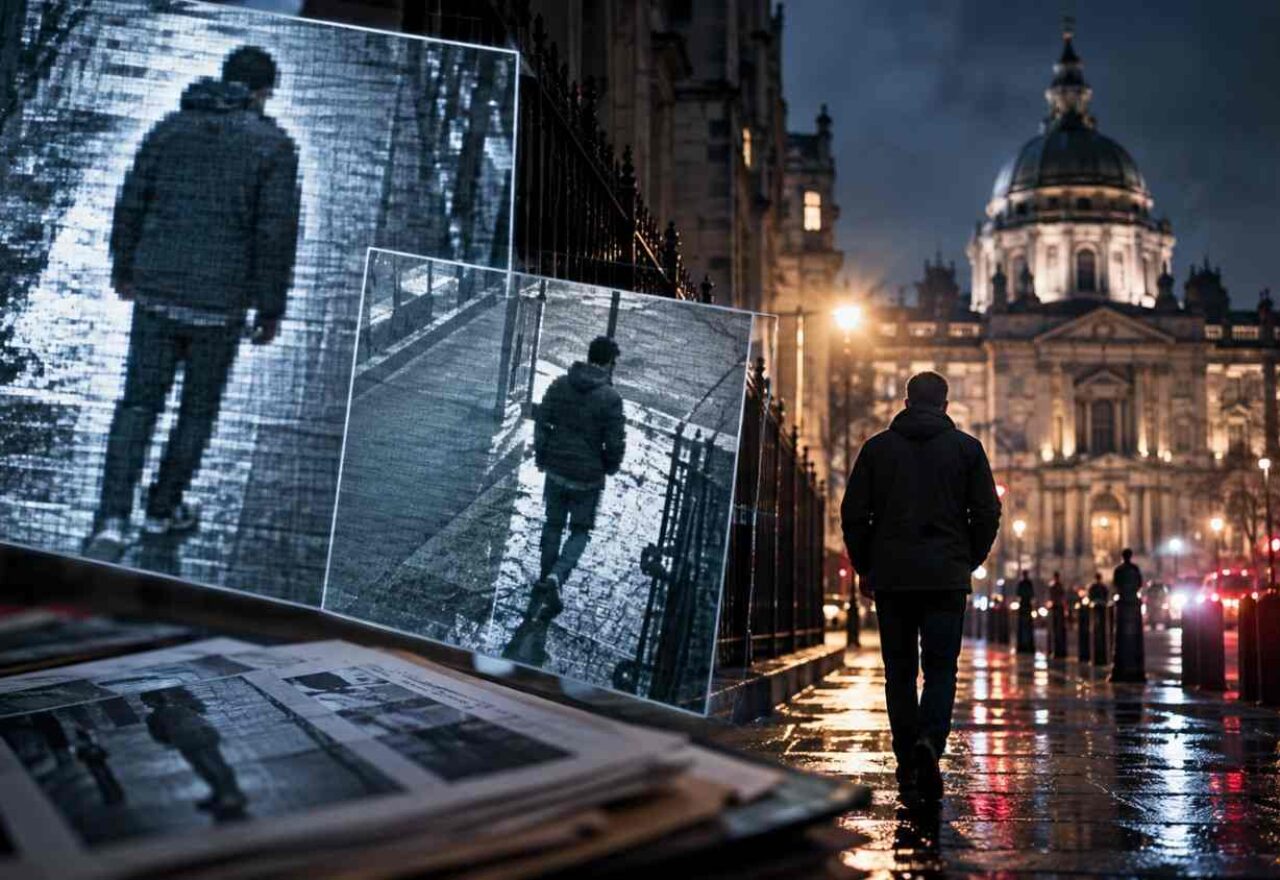
A man was charged with attempted murder after a night-time attack, and at first he was held in custody. Nothing had yet been tested. The Crown’s case depended on CCTV clothing comparisons and on officers who said they recognised him, not on a clear forensic identification.
That is all the record tells us about those early days. It gives no dates and does not describe what remand meant for him. We will not guess.
It does show what followed: bail secured before trial by exposing weaknesses in the identification evidence, a trial in which that evidence was examined again, and a not guilty verdict at the Central Criminal Court.
If you are facing this, or love someone who is, the pull is towards fear. There is a serious charge, there is footage, and police officers say it is you. The legal question is narrower. Can the Crown prove who was in that footage?
Stuart Miller Solicitors acts for people accused of attempted murder and other serious violence, including cases that turn on identification evidence and on the fight for bail. This guide uses our client’s case to explain what the Crown must prove, how bail works and what to do now.
What was alleged
The Crown alleged that our client was responsible for an attempted murder following a night-time attack.
Its case depended on two things. The first was CCTV clothing comparisons. The second was recognition by officers. Put plainly, the prosecution asked the court to accept that a figure in footage was our client because of what the figure was wearing, and because officers said they recognised him. It did not rest on a clear forensic identification.
The details published here do not say what the footage showed, how many officers gave evidence, how well they knew him, what clothing was compared or what role the Crown said he played. We have not filled those gaps.
What the record does make clear is the dispute. This was an identification case. The defence position was that the identification evidence was weak and that there were no reliable links between our client and the attack. Those are defence submissions, not findings of the court.
Attempted Murder
What the Crown must prove for attempted murder
A person attempts an offence if, with intent to commit it, they do an act that is more than merely preparatory (Criminal Attempts Act 1981, s.1). For attempted murder, that intent must be an intention to kill. Intending only to cause really serious injury is not enough (R v Whybrow (1951) 35 Cr App R 141).
The Crown must also prove that the defendant is the person responsible. It must prove every element so that the jury is sure.
Identification evidence carries a special warning
Honest witnesses can be mistaken. Where a case depends wholly or substantially on identification, the judge must warn the jury of the special need for caution before convicting, and explain why (R v Turnbull [1977] QB 224).
The jury is directed to look at the circumstances. How long did the witness have to look? From what distance, and in what light? Did anything block the view? How much time has passed? If the identification is poor and nothing supports it, the judge should withdraw the case from the jury.
Turnbull also covers recognition. Recognising someone you know may be more reliable than identifying a stranger, but mistakes in recognition still happen.
Four ways a jury may be asked to decide who is on CCTV
The Court of Appeal has identified four routes (Attorney General’s Reference (No 2 of 2002) [2002] EWCA Crim 2373):
- the image is clear enough for the jury to compare it with the defendant;
- a witness who knows the defendant well enough recognises them in the footage;
- a witness who has studied the footage closely gives an opinion based on knowledge the jury lacks; or
- a suitably qualified expert gives evidence within the limits of their discipline.
The record does not say which route the Crown used beyond “clothing comparisons” and “officer recognition”.
Officer recognition
An officer may say they know the defendant and recognise them in footage. That evidence may be admissible if the officer’s familiarity gives the jury something it lacks. The Court of Appeal has considered when it should be admitted and how its risks should be managed (for example R v Flynn and St John [2008] EWCA Crim 970). One risk is that a jury may infer earlier police contact.
A defence team can ask how well the officer knew the defendant, how often and how recently. It can ask how the officer came to view the footage, what they were shown first and whether an identification procedure under PACE Code D applied. The court also has a discretion to exclude prosecution evidence where admitting it would make the trial unfair (PACE 1984, s.78).
The record does not say what was asked in this trial, and we claim none of it.
Clothing comparisons
Clothing is a weaker basis for identification than a face. Many people own similar garments, and clothes can be borrowed, shared or replaced. A comparison can carry weight where the clothing is distinctive and other evidence supports it. Standing alone, the question is what a jury can safely conclude.
That is general reasoning. The record does not say what clothing was compared or whether any of it was distinctive.
Can you get bail on an attempted murder charge?
It is possible, but a court does not grant it lightly in a case this serious.
There is a general right to bail, subject to exceptions (Bail Act 1976, s.4 and Sch 1). A court can refuse if there are substantial grounds to believe the defendant would fail to attend, commit an offence on bail or interfere with witnesses. It can also grant bail on conditions, such as living at a named address, a curfew, electronic monitoring, reporting to a police station or not contacting witnesses.
The court weighs a list of considerations, and one is the strength of the evidence that the defendant committed the offence. That is why identification evidence matters at a bail hearing, not only at trial.
For some people with certain previous convictions for serious offences, a stricter test applies (Criminal Justice and Public Order Act 1994, s.25). Ask your solicitor whether it is relevant to you.
If bail is refused, that is not necessarily the end of the argument. Bail can often be considered again, particularly where circumstances or arguments change.
In this case, the record says bail was secured before trial by exposing weaknesses in the identification evidence. It does not say which court granted it, when, on what conditions or after how long in custody. It does not follow that weak evidence guarantees bail. It is one factor among several.
What was at stake
Attempted murder carries a maximum sentence of life imprisonment (Criminal Attempts Act 1981, s.4(1)(a)). That is a discretionary maximum, not a prediction. The Sentencing Council’s attempted murder guideline sorts cases by culpability and harm, so the role played and the injury caused matter. We suggest no category or starting point, because the facts needed to assign one are not in the record.
The stakes were immediate. In a case of this seriousness, remand is a real possibility, and in this case it happened.
If convicted, someone in this position could face a long custodial sentence, licence conditions on release, a permanent record and effects on work, study, housing and family. For someone without British citizenship, immigration consequences may follow. These are possibilities in cases like this, not facts about our client.
The wait, and what remand does to a case
The record gives no dates, so we have not built a timeline. It says only that our client was remanded at first and later granted bail.
In general, an attempted murder case runs from arrest and interview to charge, a first appearance in the magistrates’ court, sending to the Crown Court (Crime and Disorder Act 1998, s.51), preparation and trial. A case built on CCTV adds work of its own. The defence needs to see the footage, ask what else exists and examine how the defendant came to be identified.
Three measures of delay are easily confused: time under investigation, time from charge to trial and time spent in custody. If someone quotes you a figure, ask which one it is. If you are remanded, custody time limits apply. They are set by regulations and can be extended, so ask your solicitor for the current limit.
Remand can change everything at once. Work, housing, caring responsibilities and money come under pressure, and going through papers and footage with your lawyers can be harder. Bail conditions bring their own strain. Those are general observations, not a description of our client’s experience, which the record does not give.
They are also why early work on the evidence matters. A bail decision is often made before the prosecution case has been fully examined.
How the defence was built
The record describes two fronts. We set out what it says and stop where it stops.
Fighting for bail on the strength of the identification evidence
- The problem: our client was remanded at first, before any of the identification evidence had been tested.
- The legal point: the strength of the evidence is one of the considerations a court weighs on bail (Bail Act 1976, Sch 1).
- The action: the defence secured pre-trial bail by exposing weaknesses in the identification evidence.
- Why it mattered: a spokesman for Stuart Miller Solicitors said: “Winning bail early changed the whole trajectory of this case.” That is the firm’s view. The record does not describe what changed.
Using disclosure
The defence used disclosure at trial. In a case built on footage, the prosecution chooses what to put before a jury, and the defence can ask what else exists. The record does not say what was disclosed or what difference it made.
Looking beyond the selected clips
The defence used extended CCTV material. A short clip can show a moment without showing what came before or after it. Fuller footage can put a figure in context. The record does not say who obtained the extended footage or what it showed.
Pressing the absence of reliable links
The Crown’s case rested on clothing comparisons and officer recognition rather than a clear forensic identification. The defence case was that nothing reliable tied our client to the attack. The record does not describe how the clothing and recognition evidence was challenged before the jury, and we have not reconstructed it.
We do not say that any one step produced the verdict. A jury gives no reasons, and the record does not say what persuaded it.
The Verdict
The jury at the Central Criminal Court found our client not guilty of attempted murder. The case note describes the acquittal as complete. The details published here list no other count, so we say no more than that.
Precisely, this was a jury verdict after a trial, not a case the Crown chose to drop. It means the Crown did not prove its case so that the jury was sure. A jury gives no reasons, so we cannot say why it decided as it did. It is not a finding that somebody else was responsible, that the attack did not happen or that any witness was dishonest.
Some things do not end with a verdict:
- Any bail conditions end, and seized property and devices should be returned.
- Ask what police records and any DNA or fingerprint samples are held, and for how long. The rules depend on the circumstances (Police and Criminal Evidence Act 1984, as amended).
- For some roles, an enhanced criminal record check can include police information that is not a conviction. Ask how that works.
- If you paid privately, ask whether a defendant’s costs order is available. Limits apply.
- Time spent on remand before an acquittal does not generally attract automatic compensation.
Ask your solicitor to confirm in writing what was resolved and what remains.
What to do now if you are accused of attempted murder on identification evidence
What helps tonight depends on the stage you are at.
Ask for a solicitor before answering questions

Police station advice is free. You can ask for the duty solicitor or name a firm. If officers show you footage and ask you to comment, or ask you to take part in an identification procedure, take advice first. There is no single right approach. It depends on the evidence.
Find out exactly who says it is you
Ask your solicitor what the identification evidence is. Which footage? Who says the figure is you, and how do they know you? Which clothing is relied on, and what else does the Crown have? Then ask to see the footage and what else exists.
Preserve what shows where you were
CCTV from shops, homes, buses and vehicles is often overwritten within days, and some app and location data can be lost. Tell your solicitor where you were and where footage, receipts, transport records, work logs or messages might show it. Delete nothing, and do not reset devices.
In the Crown Court, a defence statement has to set out the defence, including details of any alibi. Accurate early information matters.
Be straight with your solicitor about clothing
If police say the clothing in the footage is yours or looks like yours, tell your solicitor honestly what you own and who else has access to it. Do not wash, dispose of, swap or lend anything.
Keep the case off messages and social media
Do not contact witnesses or co-suspects. Do not post or discuss the incident in group chats. Messages can be obtained and read out in court.