-

Top 1% of Defence Law Firms
-

Defended over 50,000 Cases
-

5 star google reviews
-

40 Years of Criminal Law Expertise
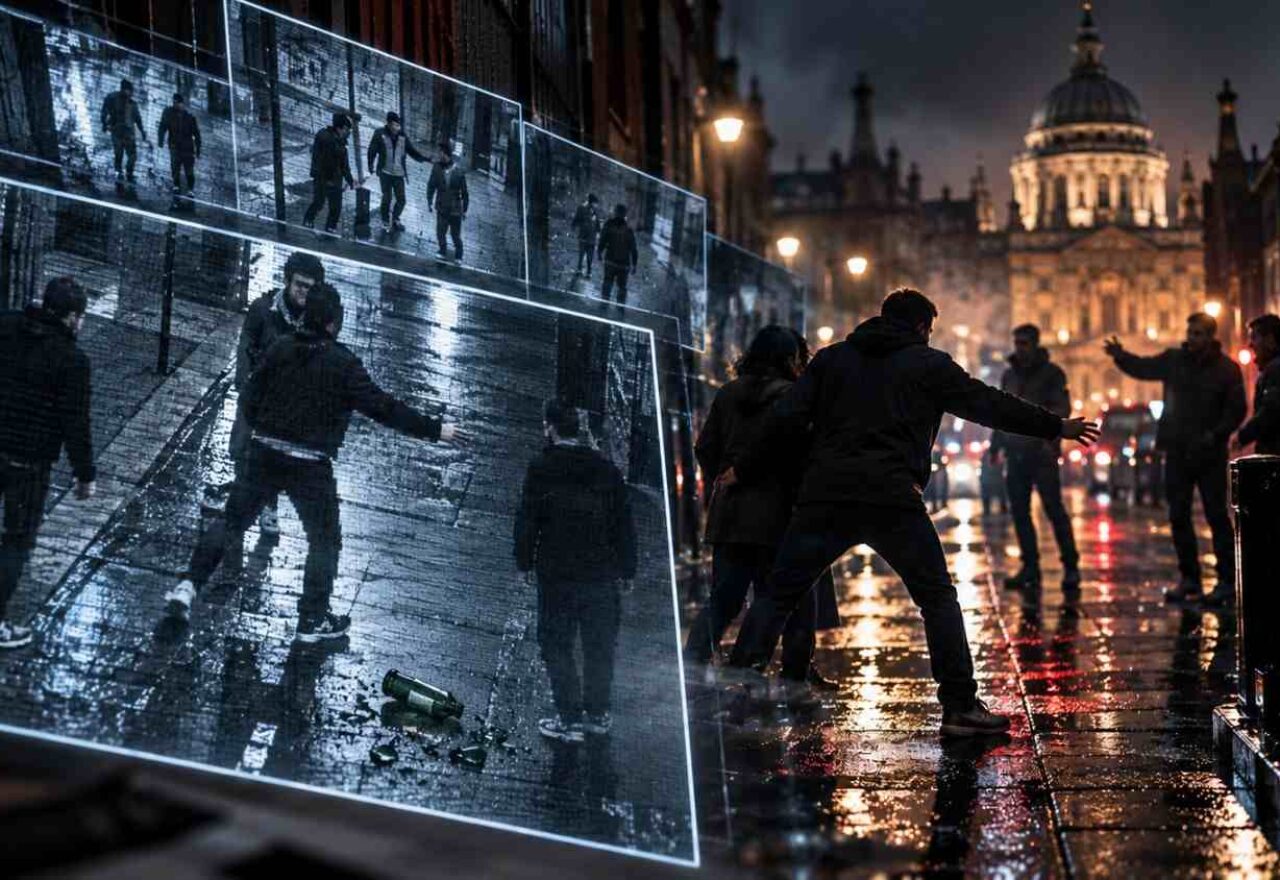

A clip that looked devastating
High-quality video. A street. A man involved in an assault with a broken bottle.
That was the footage the Crown put at the centre of its murder case against our client. On its face, it looked devastating.
But the Crown relied on a short clip. The case record says what the defence found when it looked beyond that clip: an earlier confrontation, a later escalation and a fast-moving attempt to protect another person. It does not say where that material came from, who else is visible in it or what anyone said. We have not filled those gaps.
If you are in his position, or love someone who is, you may already have watched footage and wondered how anyone could argue with it. The honest answer is that video shows what a camera saw. It does not show what happened before the camera started recording, or what a person believed in the seconds it captured.
Stuart Miller Solicitors acts for people accused of murder and other serious violence, including multi-defendant trials where CCTV is the Crown’s central evidence. This guide uses one such case to explain what the Crown must prove, what it must disprove and what to do now.
What was alleged
The Crown’s case was that our client was involved in a street assault with a broken bottle, and it pursued that involvement as murder. Murder is charged only where the Crown says a person has died. Behind this case, as behind any murder charge, is a death and a bereaved family, and nothing here is meant to lessen that. The details published here do not say who died, when or how, and we do not either.
The Crown’s key evidence was CCTV. It presented high-quality video that, on its case, showed him involved in the assault. The record says it relied on a short clip.
Several defendants were on trial. The co-defendants ran what lawyers call cut-throat tactics. Each defence blamed others, which added pressure on everyone in the dock.
The record does not say that our client’s presence or identity was in doubt. What was disputed was what the footage meant. The defence case, as recorded, was that there had been an earlier confrontation, a later escalation and a fast-moving attempt to protect another person. Those are defence submissions, not findings of any court.
Murder and the law of self-defence
What the Crown must prove for murder
Murder is an unlawful killing with an intention to kill or to cause grievous bodily harm, meaning really serious injury (R v Vickers [1957] 2 QB 664; R v Cunningham [1982] AC 566). The jury decides intent on all the evidence. It is not bound to infer intent just because death followed (Criminal Justice Act 1967, s.8).
How self-defence works
Self-defence is not a technicality or a partial excuse. If it applies, the force used was lawful and the verdict on that charge is not guilty. It rests on the common law and on section 3 of the Criminal Law Act 1967. Section 76 of the Criminal Justice and Immigration Act 2008 sets out how it works in practice.
In plain terms, the jury asks three questions:
- What did the defendant honestly believe the circumstances to be?
- Did that belief make some force necessary?
- Was the force used reasonable in the circumstances as the defendant believed them to be?
The belief must be honest. It does not have to be reasonable, although whether it was reasonable is evidence of whether it was honestly held. Force that is disproportionate in those circumstances is not reasonable. But the law also recognises that someone acting in the heat of the moment cannot weigh exactly how much force is needed. An honest, instinctive decision about what was necessary is strong evidence that the action was reasonable.
The same principles apply to using force to defend another person.
Once self-defence is raised on some evidence, the Crown carries the burden of disproving it so that the jury is sure (R v Lobell [1957] 1 QB 547).
The limits of self-defence
English law has no partial defence of “excessive” self-defence. If the jury is sure the force went beyond what was reasonable, self-defence fails entirely (R v Clegg [1995] 1 AC 482). The verdict then depends on what else the Crown has proved, including intent. Separate partial defences, such as loss of control or diminished responsibility, have their own tests.
Why the whole sequence matters
Because the jury considers the circumstances as the defendant believed them to be, what happened before and during the incident is the question itself, not background.
A clip begins at one moment, from one angle, and can leave out what came before and after. Fuller footage, witnesses or other data may show an earlier confrontation, a threat to someone else and how quickly events moved.
Context does not always help. Fuller footage can also show things that hurt a defendant, and a jury is entitled to reject self-defence. The details published here do not say what the wider material showed beyond what the defence relied on.
When co-defendants blame each other
Each defendant’s case must be proved separately. What a co-defendant says in the witness box can be used against another defendant, so it has to be tested. A co-defendant’s interest in minimising their own part is relevant to how much weight an account deserves. Conflicting accounts are the reason defendants in these trials need separate lawyers.
What was at stake
A murder conviction carries a mandatory sentence. For adults it is life imprisonment, and the judge then sets a minimum term under the Sentencing Code. The form of the sentence depends on age, which the record does not give. We say nothing about a likely minimum term, because the facts needed to assess one are not in the record.
The result here was a “lesser basis”. The record does not say which offence that was, so we cannot describe its exposure. In general, possible lesser offences include manslaughter and wounding offences. Their maximum sentences and guidelines differ, and each is discretionary. A maximum is not a prediction.
Other consequences are possibilities, not facts about our client:
- Remand in custody, which is a real risk on a murder charge, or restrictive bail.
- A permanent record, licence conditions on any release, and effects on work, study and housing.
- For someone without British citizenship, possible immigration consequences.
The wait, and a trial where defendants blame each other
The record gives no timeline, and we have not built one. What follows is general context.
A murder case runs from arrest and interview to charge, sending to the Crown Court (Crime and Disorder Act 1998, s.51), preparation and trial. A case built on CCTV adds work of its own. The defence needs all the footage, not only the selected clip, and time to review it.
Three measures of delay are easily confused: time under investigation, time from charge to trial and time spent in custody. If someone quotes you a figure, ask which one it is. If you are remanded, custody time limits apply. They are set by regulations and can be extended, so ask your solicitor for the current limit.
A trial where defendants blame each other has its own strain. Your case can be pulled off course by what others say, and you may be sitting close to people whose accounts differ from yours. Work, money and caring responsibilities may be held together by family while waiting. Those are general pressures, not a description of our client’s experience. The bereaved family is waiting too.
How the defence was built
The record describes the defence in broad terms. We set out what it says and stop where it stops.
Looking beyond the short clip
- The problem: the Crown’s case rested on a short, high-quality clip that, on its face, looked devastating.
- The legal point: self-defence turns on the whole sequence and on what the defendant believed, not on one moment.
- The action: the defence rebuilt the timeline beyond the clip. The record says it showed an earlier confrontation, a later escalation and a fast-moving attempt to protect another person.
- Why it mattered: the record itself ties the Crown’s reassessment of the murder count to this wider context.
The record does not say what material the defence used to rebuild the timeline. We do not claim other cameras, witnesses, phone data or expert evidence.
Presenting the account of protecting another person
The defence case was that our client was attempting to protect another person. That is a defence submission, not a finding. As set out above, the law of self-defence covers defending someone else.
Holding a position under cut-throat pressure
The co-defendants ran cut-throat tactics, which increased the pressure. The record says that, despite this, the wider context forced a reassessment of the murder count. It does not describe the steps taken in response to the co-defendants, so we claim no cross-examination, application or other technique.
Keeping the Crown to the offence it charged
The question was never whether a death was serious. It was whether the Crown could still say this was murder once the full sequence was in view. A spokesman for Stuart Miller Solicitors said:
“CCTV can look conclusive until somebody asks what happened before the camera started recording. Context is often the whole defence.”
We do not say any single step produced the outcome, and the record does not say why the Crown decided as it did beyond its link to the wider context.
The outcome, and what it did and did not resolve
The Crown offered no evidence on murder, and the case resolved on a lesser basis. These are two separate facts, and the second matters as much as the first.
The murder count. When the prosecution offers no evidence on a count, that count ends and a not guilty verdict is entered on it. No jury decided the murder count on the evidence, and no court decided whether our client acted in self-defence or to protect another person. The Crown reassessed its position. The record ties that to the wider context and gives no other reason, and we have not added one.
What remained. “A lesser basis” means the case did not end with the murder count. The record does not say what the lesser offence was, whether it was resolved by a plea or a verdict, or what sentence followed. It does not say what happened to the co-defendants. So this is not an acquittal of everything, and we do not describe it as one.
If a lesser offence remains in a case like this, sentence follows on the facts that are admitted or found. The factual basis matters, and if it is disputed the judge may have to decide it. Ask your solicitor to confirm in writing exactly what was resolved, what remains and what happens next.
What to do now if you face a murder charge and say you acted in self-defence
Ask for a solicitor before answering questions

Police station advice is free. You can ask for the duty solicitor or name a firm. There is no single right approach to interview. If you later rely at trial on something you could reasonably have mentioned when questioned, a court can in some circumstances draw an inference. How and when you give your account is a decision to take with a solicitor first.
Ask for all the footage, not only the clip
Ask your solicitor to request footage from every camera for a period before and after the incident, and any record of what police viewed and chose. CCTV can be overwritten quickly, so tell your solicitor where cameras are, including shops, homes, buses, vehicles and doorbells.
Tell your solicitor everything about the sequence
What happened earlier? Who was involved? What did you see, believe and fear? Who else was there? Some answers feel awkward or may not help. Your solicitor needs all of them, and needs them from you first.
Do not contact the person you say you were protecting
Do not contact them, or anyone else who saw what happened, to compare accounts. It can be misread as interference. Your solicitor can approach witnesses properly.
Record injuries and keep clothing
If you were hurt, get medical attention and tell your solicitor. Medical records can matter. Do not wash, swap or dispose of clothing, and do not delete messages, videos or posts or reset devices.
Keep the case away from co-suspects and social media
Do not post about the incident or discuss it in group chats. Where accounts may conflict, do not assume you can share a legal team with anyone else involved.
Raise the practical problems early
Bail conditions, work, housing, caring responsibilities and money come under strain in a murder case. Ask early about funding for footage review and any expert work, because it takes time to arrange.
FAQs
-
Can a murder charge be dropped after CCTV shows me in the incident?
Yes, it can happen. The Crown must keep its case under review and can decide it no longer has enough evidence to prove murder. Footage showing you took part does not settle intent or whether you acted in defence. Whether a charge is reduced or dropped depends on the full evidence, and nothing is automatic.
-
If I say self-defence, who has to prove what?
You need only raise it on some evidence. The Crown must then disprove it, so that the jury is sure you were not acting in lawful self-defence, as well as prove every element of murder. If the jury is not sure, you are entitled to be found not guilty of the offence.
-
Does self-defence cover protecting someone else?
Yes. The same principles apply to using reasonable force to defend another person. The jury considers the circumstances as you honestly believed them to be, including any threat to the other person, and asks whether the force you used was reasonable (Criminal Justice and Immigration Act 2008, s.76). The Crown must still disprove it once it is raised.
-
Does the force have to be proportionate?
It must be reasonable in the circumstances as you honestly believed them to be. Force that is disproportionate in those circumstances is not reasonable. But the law recognises that someone acting in the heat of the moment cannot weigh the exact measure of force needed, and an honest, instinctive decision about what was necessary is strong evidence (s.76).
-
What if the jury thinks I used more force than was reasonable?
Self-defence then fails. English law has no partial defence of excessive self-defence (R v Clegg). The verdict depends on what else the jury is sure of, including intent: murder if intent to kill or cause really serious injury is proved, otherwise manslaughter or another offence. Partial defences such as loss of control or diminished responsibility are considered separately.
-
Does it matter who started it, or that there was an earlier confrontation?
It can. An earlier confrontation may bear on what you believed, what you feared and whether force was necessary. There is no automatic rule, though. Who started it and whether you could have avoided the incident are matters for the jury, and fuller context can also hurt a defendant.
-
What sentence could I face?
Murder carries a mandatory life sentence, and the form depends on age. The judge sets a minimum term under the Sentencing Code. Lesser offences carry different maximums, and sentences follow the facts admitted or found. Manslaughter has a discretionary maximum of life. A maximum is not a prediction, and nobody should be sentenced on a role the Crown cannot prove.
-
What if my co-defendants blame me?
Each defendant's case must be proved separately. What a co-defendant says in the witness box can be used against you, so it must be tested. Their interest in minimising their own part is relevant to how much weight it deserves. Conflicting accounts are a reason for separate lawyers, so do not assume you can share a legal team.