-

Top 1% of Defence Law Firms
-

Defended over 50,000 Cases
-

5 star google reviews
-

40 Years of Criminal Law Expertise
If a letter has landed on your doormat telling you to attend Thames Magistrates’ Court, the first few hours are usually the worst. You are staring at a document full of legal language, you do not know how serious it is, and you cannot tell from the letter itself what evidence the prosecution actually has.
What is Thames Magistrates’ Court?
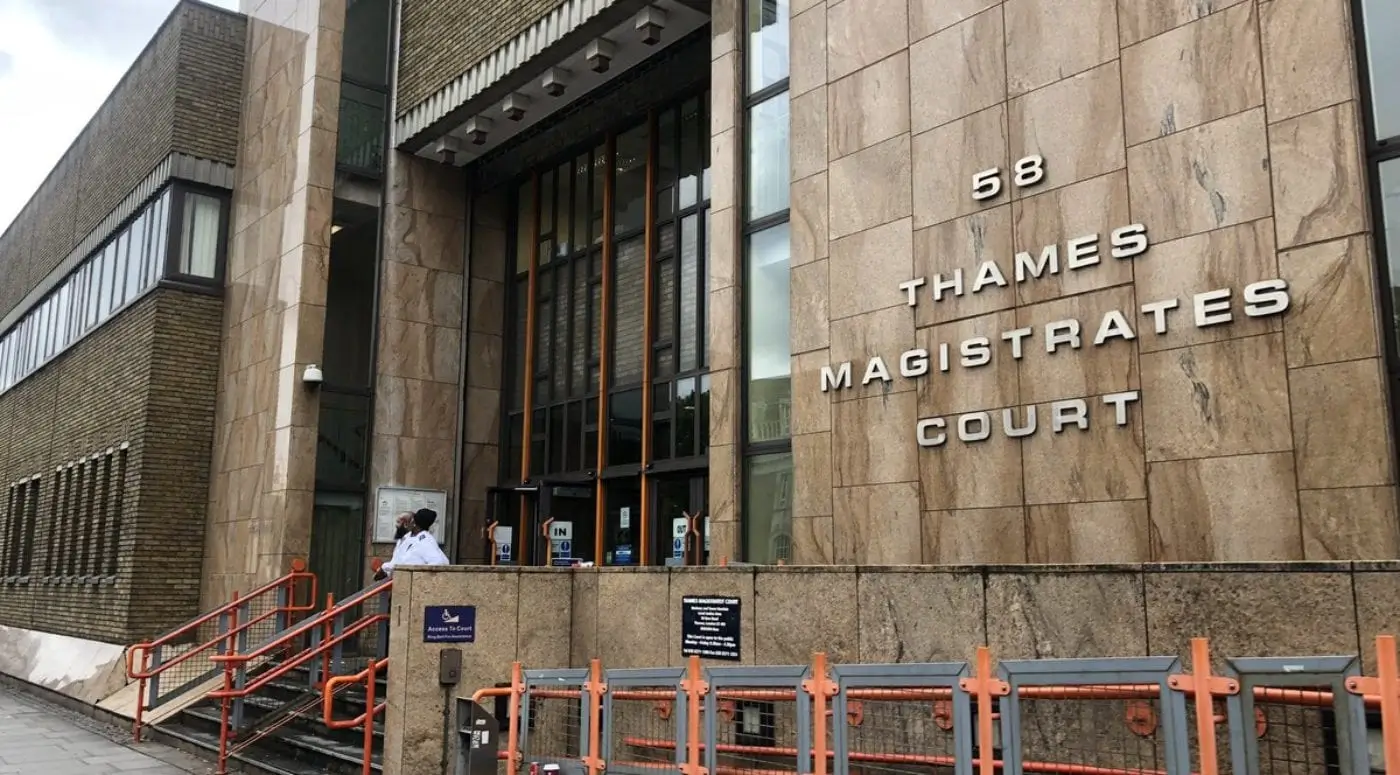
Thames Magistrates’ Court sits at 58 Bow Road in the London Borough of Tower Hamlets. It is one of the busiest magistrates’ courts in east London and deals with two main categories of work: criminal cases and Single Justice Procedure cases.
Cases at Thames typically come from Tower Hamlets, Hackney, Newham and the surrounding east London boroughs. The building also acts as the Central Administration Centre for other courts in the area, which is why letters about hearings listed at Stratford Magistrates’ Court or Barkingside Magistrates’ Court often carry a Bow Road return address. If you have received correspondence from 58 Bow Road, always check the body of the letter for the court you must actually attend the address on the envelope is not always the address of your hearing.
For legal professionals: the magistrates’ court location code is 2574 and the DX is 157540 Bow 3.
What does it mean to receive a postal requisition from Thames Magistrates’ Court?
A postal requisition is a formal document issued by a prosecutor usually the police or the Crown Prosecution Service alongside a written charge. It replaced the old system of summonses for most prosecutions and it does exactly one thing: it legally requires you to attend court on the date and at the time stated.
Three points are worth understanding immediately.
First, it is not optional. A postal requisition is not an invitation or a request. If you do not attend, the court can proceed in your absence or issue a warrant for your arrest. If the date is genuinely impossible you are in hospital, or abroad on dates you cannot change that must be raised with the court through a solicitor, in advance and with evidence.
Second, it tells you very little. The requisition names the alleged offence and the statute it comes from. It does not tell you why you have been accused, who the witnesses are, or what the evidence consists of. That material comes later, through the initial details of the prosecution case, which your solicitor requests and reviews.
Third, the clock is already running. By the time a requisition is issued, the prosecution has already investigated, reviewed and decided to charge. Preparation time before the first hearing is short, and decisions taken at that first hearing particularly on plea are difficult to undo.
If you have received one, get legal advice before you respond to anything in writing, and before you speak to the police again about the allegation.
What happens at your first hearing at Thames Magistrates’ Court?
Most first hearings follow a similar shape. You will be asked to confirm your name, address and date of birth. The charge will be put to you and you will be asked how you plead.
What happens next depends on the type of offence:
- Summary only offences (for example most driving matters, low-level public order offences) stay in the magistrates’ court from start to finish.
- Either way offences (theft, many assaults, fraud, some drug offences) begin at Thames. The magistrates decide whether the case is suitable to be dealt with there or should be sent to the Crown Court.
- Indictable-only offences (the most serious cases, such as robbery or offences involving serious violence) will be sent up to the Crown Court usually Snaresbrook at the first opportunity.
If you plead guilty, the court may sentence you the same day or adjourn for a pre sentence report. If you plead not guilty, the court will set a trial date and make directions about evidence and witnesses. Bail, and any conditions attached to it, is also dealt with at this stage.
What sentencing powers do the magistrates have?
Since November 2024, a magistrates’ court can impose up to 12 months’ custody for a single either-way offence double the previous six-month limit. That change matters more than people expect: a case that stays at Thames is no longer automatically a “minor” case, and the magistrates can pass a sentence that would previously have required a trip to the Crown Court.
The magistrates can also commit a case to the Crown Court for sentence after convicting you, if they conclude their powers are not sufficient. That risk sits behind every either-way case and is one of the main reasons venue decisions should never be made without advice.
One to watch: the Courts and Tribunals Bill, introduced in 2026, contains provisions that would allow magistrates’ sentencing powers to be increased further, to 18 or even 24 months, and would change the right to elect Crown Court trial in either way cases.
At the time of writing the Bill is still passing through Parliament and these provisions are not yet in force. Because this area is moving quickly, always check the current position with a solicitor rather than relying on an article including this one.
What is the Thames Magistrates’ Court address?
Thames Magistrates’ Court, 58 Bow Road, London, E3 4DJ.
Written correspondence and documents can be sent to the same address. Always quote your case or URN reference and your hearing date.
How do I get to Thames Magistrates’ Court?
The court is well served by public transport, and public transport is comfortably the best way to get there.
- London Underground: Bow Road station (District and Hammersmith & City lines) is a two-minute walk. Mile End station (Central, District and Hammersmith & City lines) is roughly a ten-minute walk.
- DLR: Bow Church is a short walk away, connecting to Stratford and Canary Wharf.
- Bus: numerous routes run along Bow Road (A11) towards Whitechapel, Aldgate, Stratford and Poplar.
Allow more time than you think you need. Security queues at the entrance can be long first thing in the morning, and hearings are usually listed for 9:30am or 10am. Arriving 45 minutes early is sensible; arriving late risks the case being called without you.
Where do I find Thames Magistrates’ Court parking?
There is no court car park, and parking on Bow Road itself is genuinely difficult during the day. Limited paid on-street bays and small car parks exist within a 10–20 minute walk, with more reasonable options nearer the Queen Mary University campus in Mile End. Free spaces are scarce and heavily restricted; anything around Roman Road is a long walk and rarely available.
Check restrictions and controlled parking zone hours carefully before leaving your car Tower Hamlets enforcement is active, and a parking ticket is a poor way to start a court day. If you are attending for a driving offence that could result in disqualification, driving yourself is a particularly bad idea, because you may not be able to drive home.
What are the Thames Magistrates’ Court opening hours?
The court building is open Monday to Friday, 9am to 5pm.
The public counter is open 9am to 11am and 1:30pm to 2:30pm. Outside those windows you will not be able to file documents or make enquiries in person, so telephone and email are usually faster.
What is the Thames Magistrates’ Court email address?
Thames uses different email addresses depending on the type of enquiry:
| Type of enquiry | Email address |
|---|---|
| General court enquiries | northlondonmc@justice.gov.uk |
| Payments and fines | lccccollectionunit@hmcts.gsi.gov.uk |
| Magistrates’ court enquiries (Courts and Tribunals Service Centre) | contactcrime@justice.gov.uk |
| Single Justice Procedure cases | SJS@justice.gov.uk |
| Citizens Advice Witness Service | thames.mc@cawitnessservice.cjsm.net |
Always include your name, date of birth, case reference and hearing date. Court inboxes are busy and unreferenced emails are frequently the last to be answered.
What is the Thames Magistrates’ Court phone number?
| Type of enquiry | Phone number | Hours |
|---|---|---|
| General enquiries (Crime Customer Service Centre) | 0330 808 4407 | Mon–Fri 8:30am–5:30 pm |
| Single Justice Service Contact Centre | 0300 303 0656 | Mon–Fri 8am–5pm |
| Fine queries | 0300 123 9252 | Office hours |
| Pay a fine | 0300 790 9901 | Office hours |
| Citizens Advice Witness Service | 0300 332 1363 | Office hours |
| Fax | 0870 324 0220 | — |
If you have a disability and need assistance to attend a hearing, call 0330 808 4407 in advance so arrangements can be made.
What do I do when I arrive at Thames Magistrates’ Court?
If your solicitor has not already told you where to meet, the routine is straightforward:
- Go through security. Expect a search of your person and a scan of your bag. Leave anything sharp, including small tools and multi tools, at home.
- Report to the court front desk or usher. Give your name and the time of your hearing. The usher keeps the list and will tell you which courtroom to wait outside.
- Meet your solicitor or the duty solicitor. Interview rooms are available for confidential conversations before you go in.
- Wait to be called. Listings run late far more often than they run early. Bring something to read, and bring any documents you were asked to produce proof of income, insurance, licence, or letters of support.
Points people often get wrong: dress as you would for a job interview; phones must be switched off and cannot be used to record anything; arrive with any interpreter needs already notified to the court, not raised on the day; and if you have children, note that baby changing facilities are available but the court is not a place to bring children to sit through a hearing.
Facilities and accessibility at Thames Magistrates’ Court
- Ramp access at the building entrance, a lift between the ground and first floors, and level access into courtrooms
- Interview rooms for private consultations
- Portable hearing enhancement system, available by prior arrangement
- Assistance dogs welcome, and Hidden Disabilities Sunflower lanyards available on request
- Baby changing facilities
- Video conferencing and prison-to-court video link facilities, by prior arrangement
- Interpreters can be arranged through the court — request this well before your hearing date
How do I find a solicitor for Thames Magistrates’ Court?
The single most useful thing you can do after receiving a postal requisition is to instruct a criminal defence solicitor who knows the court, the local prosecutors and the way cases are listed there.
At Stuart Miller Solicitors, we have represented thousands of clients at Thames Magistrates’ Court, from first-time defendants facing a single allegation to complex cases that were later escalated to the Crown Court. We will review the allegation, advise you on plea and venue, deal with the prosecution on your behalf, and make sure nothing is conceded at that first hearing that damages your position later.
Contact us today to arrange a free, no obligation consultation
Frequently asked questions
What happens if I ignore a postal requisition? T
he case can proceed without you and you may be convicted and sentenced in your absence. The court can also issue a warrant for your arrest. Ignoring a requisition never improves the outcome, and it removes your opportunity to put forward a defence or mitigation.
Can I change my hearing date at Thames Magistrates’ Court?
Sometimes, but only with good reason and supporting evidence, and the application should be made as early as possible. Work commitments are rarely accepted on their own. Your solicitor can make the application for you.
Do I need a solicitor for a magistrates’ court hearing?
You are entitled to represent yourself, but it is rarely wise. Magistrates can now impose up to 12 months’ custody for a single either way offence, and decisions about plea, venue and credit for an early guilty plea have long-term consequences. A duty solicitor is available at court for certain cases, but they will meet you on the day with no preparation time.
Will my case at Thames Magistrates’ Court be reported in the press?
Magistrates’ court hearings are public and journalists can attend and report. In most everyday cases nobody attends, but there is no automatic right to anonymity. Reporting restrictions apply in specific situations, such as cases involving youths, and can sometimes be applied for.
What should I wear to Thames Magistrates’ Court?
Smart, plain clothing. Think job interview rather than formal court dress. Avoid slogans, sunglasses, hats and anything that looks casual first impressions are made before you say a word.
Can I bring my phone into court?
You can bring it into the building, but it must be switched off or silent inside the courtroom, and you must not photograph or record anything. Recording court proceedings is a criminal offence.
How long will my hearing take?
The hearing itself is often short sometimes under 20 minutes for a first appearance. The waiting is the long part. Assume you will be there for most of the morning or afternoon session.
Is Thames Magistrates’ Court the same as Bow Magistrates’ Court?
People often call it “Bow magistrates” because of its Bow Road location, and older correspondence sometimes referred to Bow County Court, which is a different court dealing with civil matters. The criminal court at 58 Bow Road is Thames Magistrates’ Court.
Which Crown Court do cases from Thames get sent to?
Cases sent from Thames for trial or sentence are commonly listed at Snaresbrook Crown Court, though this can vary depending on the case and listing pressures.
Can I pay a fine issued by Thames Magistrates’ Court online?
Yes. Fines can be paid online through GOV.UK using the reference on your notice, or by phone on 0300 790 9901. If you cannot afford to pay, contact the fines team before the deadline rather than after payment terms can often be varied, but enforcement action is much harder to unwind.
What if I have a Single Justice Procedure notice instead of a requisition?
Respond within the deadline stated on the notice. You can plead guilty, plead not guilty, or ask for the case to be heard in open court. Doing nothing normally results in conviction, a fine and costs decided without your input.
Is legal aid available for cases at Thames Magistrates’ Court?
It may be, depending on the seriousness of the offence (the “interests of justice” test) and your income (the means test). We can assess your eligibility during your free consultation and make the application for you.
OUR COMMITMENTS TO YOU:
-
Responsive
A legal expert will consult you within 24 hours of making an enquiry.
-
Empathetic
We will always treat you with trust, understanding and respect.
-
Specialised
Your case will be handled by an expert who specialises in your type of offence.
-
Proactive
We will take early action to end proceedings as soon as it is practically and legally possible to do so.
-
Engaged
You will be kept updated on your case at all times. We will provide a named contact available to answer your questions.
-
Caring
We understand this is a difficult and stressful time for you and your family. Our team will support you every step of the way.
-
Tenacious
We will never give up on your case. We fight tirelessly to get you the best possible outcome.
Google Rating
Based on 516 reviews
×