
-

Top 1% of Defence Law Firms
-

Defended over 50,000 Cases
-

5 star google reviews
-

40 Years of Criminal Law Expertise
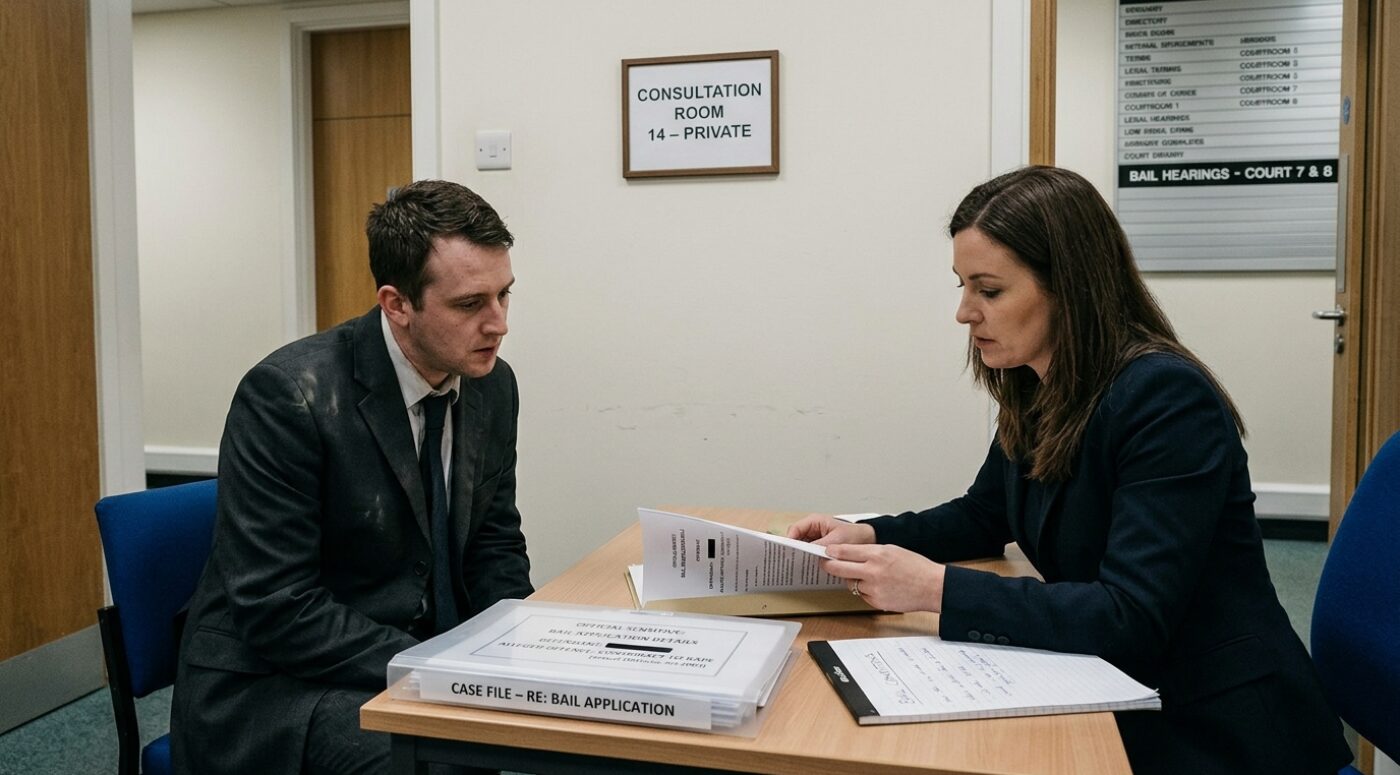
Being arrested on suspicion of conspiracy to rape is an unsettling experience. The allegation alone carries serious weight, and you may be facing uncertainty about whether you will be allowed to return home while the investigation continues. This article will explain what conspiracy to rape means in law, what happens after arrest, how bail decisions are made, and what practical steps can improve your position. It will also clarify the difference between bail and release under investigation, and how a solicitor can support you at each stage.
What is conspiracy to rape?
Conspiracy to rape is an offence under the Criminal Law Act 1977. It occurs where two or more people agree to commit the offence of rape. The prosecution does not need to prove that rape actually took place. The allegation focuses on the existence of an agreement and an intention that the rape would be carried out.
In practical terms, the Crown must show that there was a genuine agreement between at least two individuals and that each person intended to play some part in the planned offence. The agreement can be formed in person, by telephone, through messages, or even implied from conduct, although mere association is not enough.
Rape itself is one of the most serious offences under English law. When it is alleged that there was a plan involving more than one person, the courts treat the matter with particular caution because of the risks posed to public safety. Even at the investigation stage, conspiracy to rape is viewed as a grave allegation, and that inevitably influences bail decisions.
What happens after an arrest for conspiracy to rape?
If you are arrested on suspicion of conspiracy to rape, you will be taken to a police station and interviewed under caution. The police may seek to gather evidence from phones, computers, social media accounts, CCTV, and witness statements. Because conspiracy often involves communication between individuals, digital evidence is frequently central to the investigation.
You may be held in custody while officers assess the available evidence and decide whether further enquiries are required. In serious cases such as this, detention can be authorised for extended periods within the limits set by law.
At the end of the detention period, one of several outcomes is possible. The police may release you on bail, release you under investigation, charge you and grant bail to attend the Magistrates’ Court, or charge you and remand you in custody to appear at the next available hearing. The decision made at this stage can have a significant impact on your immediate future.
What is the difference between bail and being released under investigation?
Police bail means you are released from custody subject to conditions and a requirement to return to the police station or attend court at a specified time. Bail can be pre-charge or post-charge. Pre-charge bail applies while the investigation continues. Post-charge bail applies once you have been formally charged and are awaiting a court hearing.
Release under investigation, often referred to as RUI, means you are released without conditions while enquiries continue. You do not have a fixed date to return, although you can be asked to attend voluntarily if and when the police decide to take further action.
In allegations of conspiracy to rape, release under investigation is less common than in minor cases. This is because the police may consider that safeguards are needed to protect complainants or the public. Where they believe there is any ongoing risk, bail with conditions is more likely than unconditional release.
Can I get bail for conspiracy to rape?
Bail is legally available for conspiracy to rape, but it is never automatic. Both the police and the courts have the power to refuse bail if specific legal grounds are met. The seriousness of this allegation means that decision-makers will scrutinise the circumstances very carefully.
If you are charged, your first appearance will be before the Magistrates’ Court. Conspiracy to rape is an indictable-only offence, so the case will ultimately be sent to the Crown Court. However, the Magistrates’ Court will usually consider bail in the first instance. If bail is refused there, an application can be renewed before the Crown Court.
The law starts from a general presumption in favour of bail. That presumption can be displaced if there are substantial grounds for believing that, if released, you would fail to attend court, commit further offences, or interfere with witnesses or obstruct justice. In allegations involving sexual violence or planned sexual violence, concerns about witness interference and public protection are often central to the decision.
Whether you are granted bail will depend entirely on the particular facts of your case, your personal history, and the safeguards that can be put in place.
What bail conditions might I face for conspiracy to rape?
Where bail is granted in conspiracy to rape cases, it is common for conditions to be imposed. These are designed to manage risk and ensure the integrity of the investigation.
Typical conditions may include:
- Not contacting, directly or indirectly, the complainant or any named witnesses
- Not entering a defined geographic area, such as the complainant’s address or workplace
- Residing at a specified address and notifying police of any change
- Observing a curfew, sometimes monitored by electronic tag
- Restrictions on using certain devices or contacting co-suspects
The exact conditions will depend on the allegations. For example, if the alleged conspiracy involved online communication, restrictions on internet use may be considered. If the concern is about potential pressure being applied to a complainant, strict non-contact provisions are likely.
Breaching bail conditions is a serious matter and may result in arrest and reconsideration of bail, which can lead to remand in custody.
What factors do police and courts consider when deciding bail for conspiracy to rape?
When assessing bail, the police or court will examine a combination of legal and factual considerations. The seriousness of conspiracy to rape is always relevant, particularly because it involves an alleged plan to commit a grave sexual offence.
Among the key factors considered are the strength of the evidence, whether there is corroborating material such as messages or recordings, and whether other suspects are involved. The court will also look at your previous convictions, especially any history of sexual or violent offences.
Your personal circumstances are equally important. Stable accommodation, steady employment, and family responsibilities can all weigh in your favour. Conversely, a history of failing to attend court or breaching previous bail conditions will make bail more difficult to secure.
Risk to the complainant or wider public protection is central in this type of case. If the court concludes that no realistic conditions could adequately manage those risks, it has the power to refuse bail altogether.
What can I do to improve my chances of being granted bail?
Although the final decision lies with the police or the court, there are constructive steps you can take to present yourself as a suitable candidate for bail.
You should ensure that accurate information about your living arrangements, employment, and support network is available. Courts are more receptive to bail proposals that are realistic and verifiable.
- Provide confirmation of a fixed address where you can reside
- Offer details of employment or education commitments
- Identify a responsible person willing to support you, if appropriate
- Demonstrate a willingness to comply with reasonable conditions
- Follow your solicitor’s advice carefully at every stage
Do not to attempt to contact any complainant or co-suspect, even informally, as this can seriously undermine an application for bail. Showing that you understand the gravity of the situation and will respect the court’s authority can make a meaningful difference.
How can a solicitor help me secure bail for conspiracy to rape?
Early legal representation is vital in serious allegations such as conspiracy to rape. A solicitor can make informed representations to the police before charge, addressing concerns about risk and proposing proportionate conditions instead of continued detention.
If you are charged, your solicitor will prepare a structured bail application for the Magistrates’ Court or Crown Court. This may involve gathering supporting documents, contacting potential sureties, and presenting a clear plan that reduces perceived risks. Experienced advocates understand how courts approach allegations of group sexual offending and can tailor submissions accordingly.
Where bail is initially refused, a solicitor can advise on renewing the application if circumstances change, ensuring that any new information is properly presented.
Where to get more help
An allegation of conspiracy to rape is extremely serious, and decisions made in the early stages can shape the course of your case. Obtaining informed legal advice as soon as possible allows you to understand your options and approach bail strategically rather than reactively. Careful preparation, discreet handling of sensitive information, and firm but measured advocacy can all affect the outcome. If you or someone you care about are facing this situation, you can book a free, no obligation consultation with Stuart Miller Solicitors by contacting us today.
OUR COMMITMENTS TO YOU:
-
Responsive
A legal expert will consult you within 24 hours of making an enquiry.
-
Empathetic
We will always treat you with trust, understanding and respect.
-
Specialised
Your case will be handled by an expert who specialises in your type of offence.
-
Proactive
We will take early action to end proceedings as soon as it is practically and legally possible to do so.
-
Engaged
You will be kept updated on your case at all times. We will provide a named contact available to answer your questions.
-
Caring
We understand this is a difficult and stressful time for you and your family. Our team will support you every step of the way.
-
Tenacious
We will never give up on your case. We fight tirelessly to get you the best possible outcome.
Google Rating
Based on 520 reviews
×