
-

Top 1% of Defence Law Firms
-

Defended over 50,000 Cases
-

5 star google reviews
-

40 Years of Criminal Law Expertise
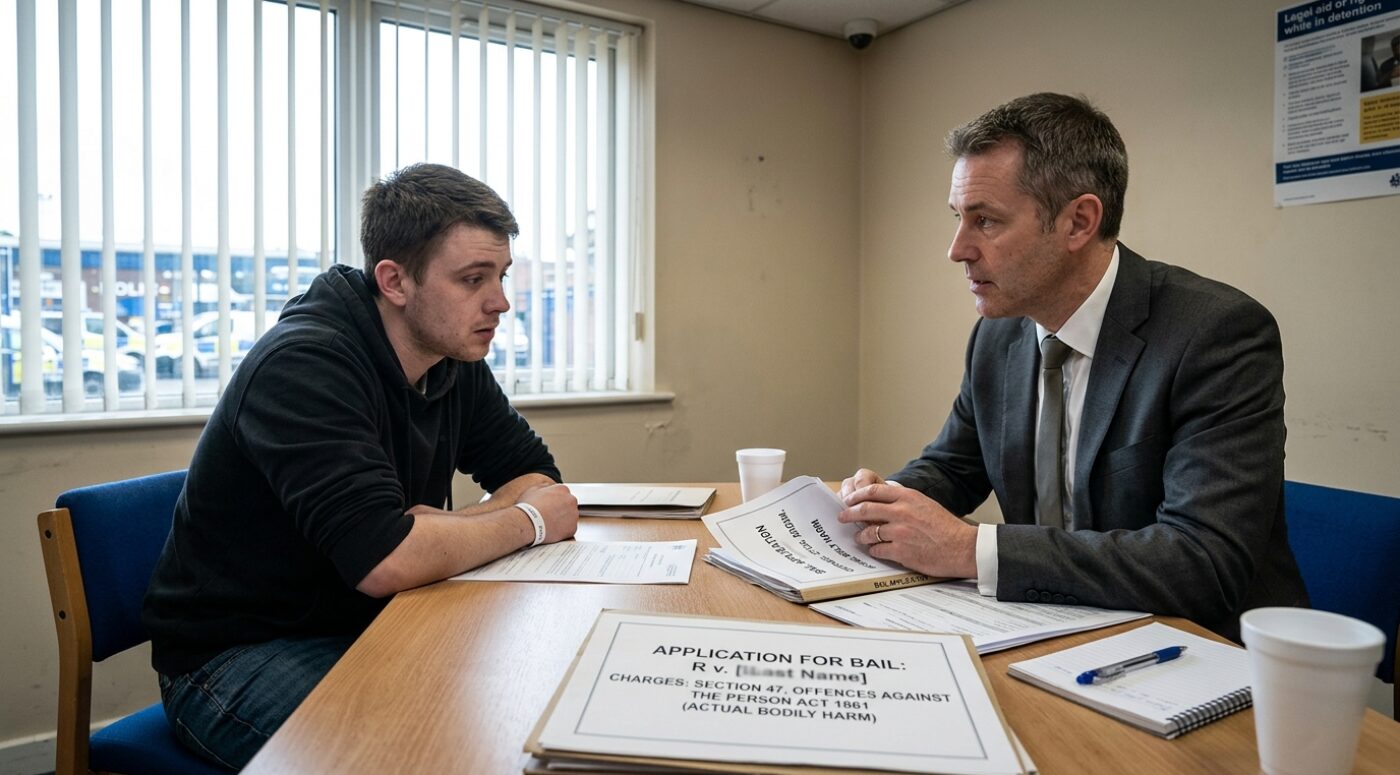
Actual bodily harm is a grave offence and if you have been arrested or charged with it, you may be worried about whether you will be kept in custody, how long the process will take, and what it means for your work and family. Bail decisions are not automatic, and they depend on the details of your case and your personal circumstances. This article will explain what actual bodily harm involves, what happens after arrest, how bail decisions are made, what conditions you might face, and how a solicitor can help you put forward the strongest case for release.
What is actual bodily harm?
Actual bodily harm, often referred to as ABH, is an offence under Section 47 of the Offences Against the Person Act 1861. It involves an assault that causes more than minor or trivial injury. The injury does not need to be permanent or life-threatening, but it must go beyond brief discomfort or very minor contact.
Common examples include cuts requiring stitches, significant bruising, minor fractures, or injuries that need medical treatment. It can also include recognised psychiatric injury if supported by medical evidence. The offence can arise from a fight, a domestic incident, or a single act such as pushing someone who then falls and is injured.
Actual bodily harm is treated more seriously than common assault because of the level of injury, but it is less serious than grievous bodily harm (also known as GBH). Even so, it is an either-way offence, which means it can be heard in either the Magistrates’ Court or the Crown Court, depending on the circumstances and seriousness.
What happens after an arrest for actual bodily harm?
If you are arrested on suspicion of actual bodily harm, you will be taken to a police station for questioning. You have the right to free and independent legal advice. It is strongly advisable to speak to a solicitor before answering questions.
The police will investigate the incident. This may include taking statements from witnesses, reviewing CCTV or phone footage, and obtaining medical evidence about the alleged injury. You may be interviewed under caution. What you say can later be used in court.
After the interview, the police will decide whether there is enough evidence to charge you. They may release you without further action, release you under investigation, grant you bail, or charge you and either keep you in custody to appear before the next sitting of the Magistrates’ Court or release you on bail to attend court at a later date.
What is the difference between bail and being released under investigation?
Police bail means you are released from custody but must return to the police station or attend court on a specific date. Bail often comes with conditions which you must follow. If you breach those conditions, you can be arrested and brought back into custody.
Release under investigation, sometimes called RUI, means you are allowed to go home while the investigation continues, but without a fixed return date and usually without conditions. You are still under investigation and can be contacted later if the police decide to take further action.
In cases of actual bodily harm, particularly those involving an identifiable complainant, police may prefer bail with conditions rather than release under investigation. This is often because they consider there to be a risk of contact between the parties or further allegations.
Can I get bail for actual bodily harm?
There is a general legal principle in favour of bail in the United Kingdom. In most cases, a person charged with an offence has the right to be granted bail unless there are specific reasons to refuse it. That being said, this is not an absolute right.
For actual bodily harm, bail is commonly granted, especially where the allegation relates to a one-off incident, the injuries are at the lower end of seriousness, and the accused has no history of violence. That said, each case turns on its own facts. If the allegation involves a domestic setting, repeated violence, or vulnerable individuals, the risk assessment may be very different.
If you are charged and brought before the Magistrates’ Court, the court will consider whether there are grounds to believe that you might fail to attend, commit further offences, interfere with witnesses, or otherwise obstruct the course of justice. If such risks cannot be managed by conditions, bail can be refused and you may be remanded in custody.
What bail conditions might I face for actual bodily harm?
Bail conditions are designed to address specific risks identified by the police or the court. They are not intended to punish you before trial. In actual bodily harm cases, conditions usually focus on preventing further contact or conflict.
Depending on the circumstances, conditions might include:
- No contact, directly or indirectly, with the complainant
- Not to attend a particular address or area
- Residence at a specified address
- A requirement to report to a police station at set times
- Living away from a shared family home
In domestic allegations, a condition preventing return to the family home is common, even if you jointly own or rent the property. These conditions can be disruptive, but breaching them is likely to result in arrest and could affect your chances of remaining on bail.
What factors do police and courts consider when deciding bail for actual bodily harm?
The main considerations are set out in the Bail Act 1976. The police or court will look at whether there are substantial grounds to believe you might fail to attend court, commit further offences while on bail, or interfere with witnesses.
In an actual bodily harm case, they are likely to examine the nature of the alleged assault. Was it spontaneous or planned? Was a weapon used? How serious were the injuries? Is there any evidence of ongoing hostility between you and the complainant?
Your personal background also matters. Previous convictions, especially for violence, will be relevant. So will any history of failing to attend court. On the other hand, steady employment, stable accommodation, and a lack of previous offending can weigh in your favour.
If the allegation arises in a domestic context, safeguarding concerns will be prominent. The court will be cautious if it believes there is a risk of further harm or pressure being placed on the complainant. The decision is a balancing exercise, taking all available information into account.
What can I do to improve my chances of being granted bail?
Although the final decision rests with the police or court, there are practical steps that can strengthen your position. The aim is to show that any identified risks can be properly managed.
Preparation and clear information make a difference. This may involve demonstrating that you have somewhere suitable to live, ideally away from the complainant if necessary, and that you understand the importance of complying with conditions.
- Provide details of a stable address where you can stay
- Show evidence of employment or education commitments
- Offer to abide by strict no-contact conditions
- Identify a responsible person willing to support you
- Ensure you attend court promptly and appropriately dressed
It is also crucial to avoid any form of contact with the complainant after arrest, even if you believe matters can be resolved privately. Attempts to discuss the allegation can be interpreted as interference and may seriously damage a bail application.
How can a solicitor help me secure bail for actual bodily harm?
A solicitor plays an important role in shaping how your situation is presented. At the police station, they can make representations about why bail with proportionate conditions is appropriate rather than continued detention.
If you appear before the Magistrates’ Court, your solicitor can address the bench directly, challenge any suggestion that you pose an unmanageable risk, and propose workable conditions tailored to your circumstances. This may include suggesting alternative accommodation or clarifying misunderstandings about your background.
A considered, structured argument can make the difference between bail being refused and bail being granted with conditions. Your solicitor will also advise you realistically if the risks are high, so that you are prepared for the possible outcomes.
Finally, solicitors also play a key role in helping you manage your mental health and wellbeing throughout the case. Having a professional to turn to at every stage is immensely reassuring.
Where to get more help
An allegation of actual bodily harm should be taken very seriously from the outset. Experienced representation – like that you will receive at Stuart Miller Solicitors – means your personal circumstances are put forward clearly and any proposed safeguards are properly explained. If you are facing this situation, seek confidential advice as soon as possible so you can make informed decisions about your next steps. For help with next steps, contact the team today and we will arrange a free, no obligation, and completely confidential consultation about your defence.
OUR COMMITMENTS TO YOU:
-
Responsive
A legal expert will consult you within 24 hours of making an enquiry.
-
Empathetic
We will always treat you with trust, understanding and respect.
-
Specialised
Your case will be handled by an expert who specialises in your type of offence.
-
Proactive
We will take early action to end proceedings as soon as it is practically and legally possible to do so.
-
Engaged
You will be kept updated on your case at all times. We will provide a named contact available to answer your questions.
-
Caring
We understand this is a difficult and stressful time for you and your family. Our team will support you every step of the way.
-
Tenacious
We will never give up on your case. We fight tirelessly to get you the best possible outcome.
Google Rating
Based on 516 reviews
×