-

Top 1% of Defence Law Firms
-

Defended over 50,000 Cases
-

5 star google reviews
-

40 Years of Criminal Law Expertise
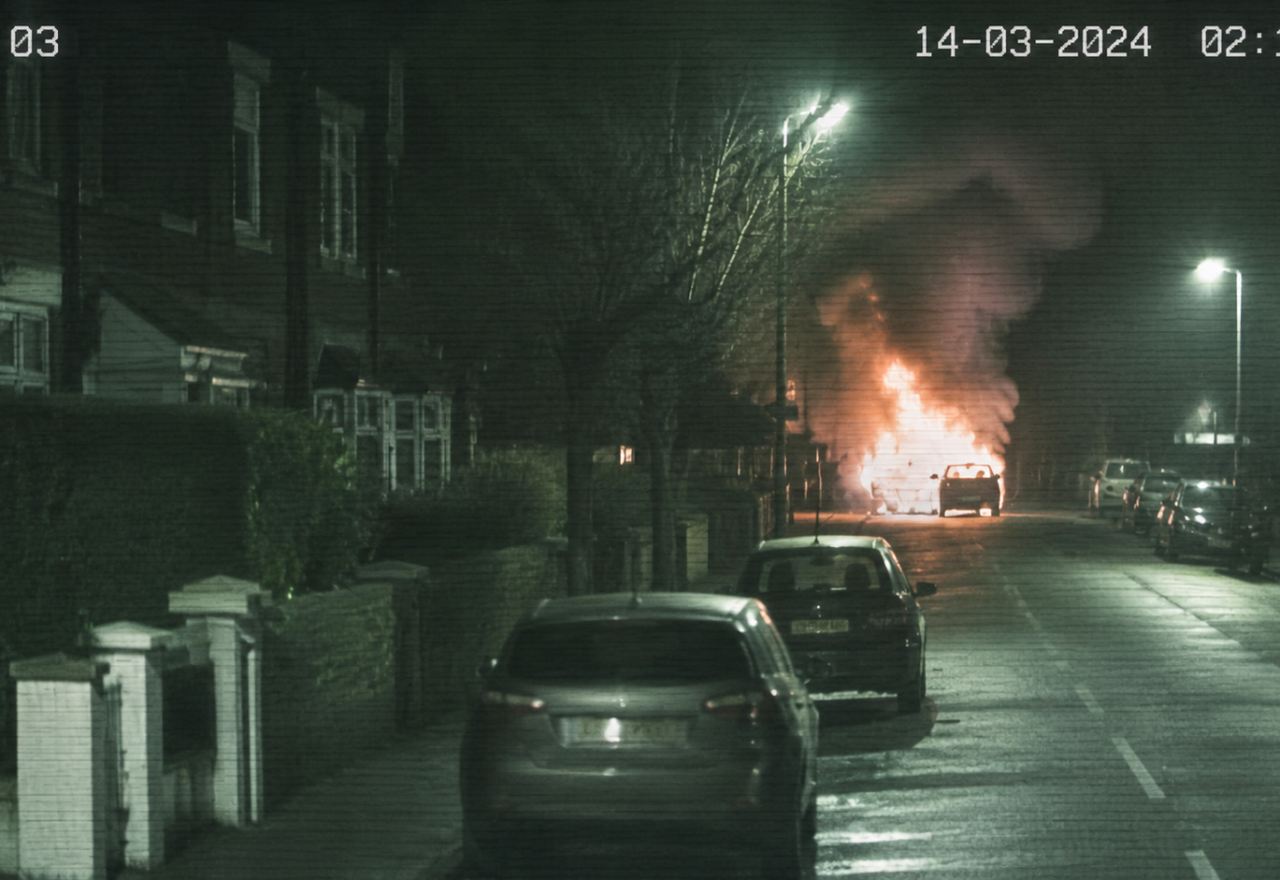
A Range Rover in flames, a murder investigation, and two men accused of making the evidence disappear
A man was shot dead in North London. The shooting was alleged to be gang-related. In the hours that followed, the Range Rover used in the killing was driven to a quiet location and set on fire. The police needed to find out who destroyed the vehicle, because the vehicle was evidence, potentially the most important piece of evidence in a murder investigation.
Two men were charged with perverting the course of justice. The Crown said they were responsible for disposing of the Range Rover. The prosecution relied on CCTV footage, cell-site data from mobile phones and a flight booking to Somalia made a couple of days after the shooting.
But the CCTV showed someone else. The cell-site data, when properly analysed, showed one client had not moved from a friend’s house. And the other client had no idea that anyone in the car he was travelling in intended to destroy a vehicle.
If you are reading this because you have been accused of interfering with a criminal investigation, two questions are probably running together. Can they prove I intended to destroy evidence? And what happens when the CCTV and phone data do not match the prosecution’s story? This guide answers both. It uses our clients’ case to explain what the Crown must prove in a perverting the course of justice case and what a defence team can achieve by testing the evidence properly.
Stuart Miller Solicitors acts for people accused of serious offences, including perverting the course of justice in murder investigations. Both of our clients were acquitted after a six-week trial. This guide uses their case to explain the law, the evidence and the process.
The Allegation
The Crown alleged that our two clients committed acts tending and intended to pervert the course of public justice. The charges arose from a murder investigation following a fatal shooting in North London in July 2022. The deceased was shot dead in what the prosecution described as a gang-related attack.
The Crown’s case was that our clients were involved in disposing of the Range Rover that had been used in the shooting. The vehicle was driven to a deposition site in the hours after the killing and set on fire.
The prosecution’s case against each client was different:
- Our first client was accused of arranging the destruction of the Range Rover and driving it to the deposition site where it was set alight. The Crown relied on cell-site data said to place his phone in the area and on CCTV footage of the vehicle.
- Our second client was seen on CCTV in a vehicle that had been driven to the location where the Range Rover was set on fire. The prosecution also relied on evidence of a flight booking to Somalia made a couple of days after the shooting, arguing that this demonstrated consciousness of guilt and an intention to evade justice.
The defence case was that neither client was guilty:
- Our first client said he had remained stationary at a friend’s house throughout the relevant period and had not left. He denied arranging the destruction of any vehicle or driving it anywhere. The defence instructed cell-site experts to re-assess the data and reviewed the CCTV footage, which showed a person driving the vehicle who was of a completely different physical description to our client.
- Our second client accepted that he was in a vehicle that travelled to the location of the fire. However, he had no knowledge or belief that anyone in the vehicle intended to destroy a Range Rover, and he did not know that a Range Rover had been destroyed.
The record does not say who the deceased was, who was charged with the murder, what the outcome of the murder trial was or what the relationship between our clients and the alleged shooters was. It does not say what specific location the Range Rover was taken to or what the CCTV footage showed in detail beyond the points described above. We have added none of it.
The dispute the record identifies is about knowledge and intention. Did our clients deliberately do acts intended to pervert the course of justice, or were they caught up in events they did not understand and did not intend to assist?
Perverting the course of justice: the law in plain English
What the Crown must prove
Perverting the course of justice is a common law offence. There is no single statutory definition. The Crown must prove three things so that the jury is sure:
- The defendant did an act or series of acts. The conduct must be more than mere inaction. The defendant must have done something positive.
- The act had a tendency to pervert the course of public justice. This means the act must have been capable of interfering with a criminal investigation, trial or other judicial process. The course of justice must have been in existence at the time, typically, this means an investigation was underway or an offence had been committed.
- The defendant intended to pervert the course of public justice. This is the critical element. The Crown must prove that the defendant acted with the specific purpose of interfering with the investigation or prosecution. Recklessness is not enough. Negligence is not enough. The defendant must have intended the result.
The offence carries a maximum sentence of life imprisonment, though sentences vary widely depending on the circumstances. The Sentencing Council does not have a specific guideline for perverting the course of justice, so judges rely on case law and the general principles of sentencing.
Knowledge and intention are everything
The mental element of the offence is what separates guilt from innocence. A person who destroys a vehicle knowing it was used in a murder and intending to prevent the police from examining it is guilty of perverting the course of justice. A person who happens to be in a car that drives past a burning vehicle, or who travels to a location without knowing what others plan to do there, is not.
The Crown must prove that each defendant individually had the required knowledge and intention. Joint enterprise principles can apply to perverting the course of justice, but the Crown must still prove that each defendant shared the common purpose of interfering with the investigation.
What counts as “perverting”?
The courts have identified a wide range of conduct that can amount to perverting the course of justice, including:
- destroying, concealing or fabricating evidence;
- intimidating or threatening witnesses;
- providing false information to the police;
- assisting a suspect to evade arrest; and
- disposing of items used in the commission of a crime.
Disposing of a vehicle used in a murder clearly falls within this category, if the person doing it knows what the vehicle was used for and intends to prevent the police from examining it.
Evidence of flight
The prosecution relied on a flight booking to Somalia made by our second client a couple of days after the shooting. Evidence of flight, leaving the country or attempting to do so shortly after a crime, is admissible as evidence from which a jury may infer consciousness of guilt.
However, evidence of flight is not conclusive. People leave the country for many reasons: family emergencies, pre-planned travel, work commitments or fear of being caught up in an investigation they are not part of. The jury must consider the evidence of flight in the context of all the other evidence and must not convict on the basis of a flight booking alone.
The record does not say whether the flight was actually taken, whether it had been booked before the shooting or what explanation, if any, our client gave for the booking. We have not speculated.
CCTV, cell-site evidence and the limits of digital proof
What CCTV can and cannot show
CCTV footage can show who was in an area, what vehicles were present and what movements took place. It is powerful evidence, and juries tend to give it significant weight.
What CCTV cannot always show is identity. In this case, the prosecution relied on CCTV footage said to show our first client driving the Range Rover to the deposition site. The defence reviewed the footage and found that the person driving the vehicle was of a completely different physical description to our client.
Identification from CCTV is governed by the same principles as eyewitness identification. The leading authority is R v Turnbull [1977] QB 224, which requires the court to consider the quality of the image, the circumstances of the recording and whether there is supporting evidence. A grainy image of a person in a vehicle at night is very different from a clear facial recognition in daylight.
The defence’s review of the CCTV was not a matter of opinion. The person on camera was of a completely different description. That is a factual observation that went to the heart of the Crown’s case.
What cell-site evidence can and cannot show
Cell-site analysis uses network records of which mast, and which sector of it, a handset connected to when it was used. A scientist can say whether use was consistent with an area. The area can be wide, and the data does not give an exact position.
In this case, the Crown relied on cell-site data to argue that our first client’s phone was in the area of the deposition site. The defence instructed its own cell-site experts to re-assess the material. The experts’ analysis showed that our client’s phone had remained stationary at a friend’s house throughout the relevant period and had not travelled to the location where the Range Rover was destroyed.
Cell-site data has well-known limitations:
- It shows where a handset was, not where the person was. A phone can be left behind, lent to someone else or carried by another person.
- The coverage area of a cell mast can be large, particularly in urban areas where multiple masts overlap.
- The data must be interpreted by a qualified expert, and different experts may reach different conclusions from the same raw data.
Expert opinion is admissible where it gives the court information outside its own experience (R v Turner [1975] QB 834). Experts owe their duty to the court (Criminal Procedure Rules, Part 19). In this case, the defence’s cell-site experts reached a different conclusion from the Crown’s, and the jury accepted the defence’s analysis.
The danger of conflating proximity with participation
A recurring theme in this case was the Crown’s tendency to treat proximity as participation. Our second client was in a vehicle that travelled to the location of the fire. The Crown treated that proximity as evidence of involvement in the destruction of the Range Rover.
But being in a car that drives to a location is not the same as knowing what will happen there. The defence case was that our second client had no knowledge or belief that anyone in the vehicle intended to destroy a Range Rover. He did not know a Range Rover had been destroyed. He was simply a passenger in a car that happened to travel to a location where, unknown to him, a crime was being committed.
The jury accepted that account. Proximity is not participation, and presence is not intent.

What was at stake
Perverting the course of justice carries a maximum sentence of life imprisonment. There is no statutory sentencing guideline, but the courts have established that sentences for perverting the course of justice in the context of a murder investigation are typically severe. Reported cases involving the destruction of evidence in murder investigations have attracted sentences of four to ten years or more, depending on the defendant’s role, the seriousness of the underlying offence and the extent of the interference.
Had our clients been convicted, they would have faced substantial custodial sentences. The underlying offence was murder, one of the most serious crimes in the criminal calendar, and the alleged conduct involved the destruction of what may have been the most important piece of physical evidence in the investigation.
A conviction would also have meant a permanent criminal record for a serious offence of dishonesty and interference with justice, with lifelong consequences for employment, travel, housing and, for anyone without British citizenship, immigration status.
Both clients were acquitted. They received no sentence. The difference between a conviction and an acquittal in a case of this kind is the difference between years in prison and the preservation of their liberty and their futures.
The wait, and what a six-week trial means for two defendants
The record gives limited detail about the timeline, and we have not built one beyond what is stated. It confirms that both clients were acquitted following a six-week trial.
A six-week trial involving two defendants, a murder investigation, CCTV footage, cell-site data, flight records and expert evidence is a substantial undertaking. The volume of material is enormous: hours of CCTV from multiple cameras, thousands of cell-site data points, phone extractions, witness statements, forensic reports and the evidence relating to the underlying murder.
The record describes the defence preparation in terms that convey the scale of the task: hours of case conferences, detailed review of CCTV footage and the instruction of experts to re-assess the cell-site material. This is not work that can be done quickly or superficially. Every frame of CCTV, every cell-site data point and every witness statement must be examined for inconsistencies, gaps and alternative explanations.
For the defendants, a six-week trial means six weeks of sitting in the dock, listening to evidence about a murder they say they had no part in, waiting for the jury to decide whether the Crown’s circumstantial case is strong enough to convict.
The record does not say whether our clients were on bail or remanded in custody during the trial, how long the investigation lasted before the charges were brought or what impact the proceedings had on their families. We have not guessed.
How the defence was built
The record describes the defence strategy in clear terms. We set out what it says and stop where it stops.
Re-assessing the cell-site evidence
- The problem: the Crown relied on cell-site data to place our first client’s phone in the area of the deposition site where the Range Rover was set on fire.
- The legal point: cell-site data shows where a handset was, not where the person was. The coverage area of a mast can be wide, and the data must be interpreted by a qualified expert. Different experts may reach different conclusions from the same raw data.
- The action: the defence instructed cell-site experts to re-assess the material. The experts concluded that our first client’s phone had remained stationary at a friend’s house throughout the relevant period.
- Why it mattered: the Crown’s case placed our client at the scene. The defence’s expert evidence showed he was somewhere else entirely. The jury accepted the defence’s analysis.
Reviewing the CCTV to test identification
- The problem: the Crown relied on CCTV footage said to show our first client driving the Range Rover to the deposition site.
- The legal point: identification from CCTV must be scrutinised in accordance with the principles in R v Turnbull [1977] QB 224. The quality of the image, the circumstances of the recording and any supporting evidence all matter.
- The action: the defence conducted a detailed review of the CCTV footage and found that the person driving the vehicle was of a completely different physical description to our first client.
- Why it mattered: the Crown’s case depended on the CCTV showing our client behind the wheel. If the person on camera was someone else, the Crown’s case on that point collapsed.
Establishing the absence of knowledge and intent
- The problem: our second client was seen on CCTV in a vehicle that travelled to the location of the fire. The Crown treated his presence as evidence of involvement in the destruction of the Range Rover.
- The legal point: perverting the course of justice requires proof of intention. A person who is present at a location without knowing what others plan to do there cannot be guilty of intending to pervert the course of justice.
- The action: the defence established that our second client had no knowledge or belief that anyone in the vehicle intended to destroy a Range Rover and did not know that a Range Rover had been destroyed.
- Why it mattered: without knowledge, there can be no intention. Without intention, the offence of perverting the course of justice is not made out. The jury acquitted.
Challenging the flight evidence
- The problem: the Crown relied on a flight booking to Somalia made by our second client a couple of days after the shooting to argue consciousness of guilt.
- The legal point: evidence of flight is admissible but not conclusive. A flight booking is not proof of an intention to pervert the course of justice. People travel for many reasons, and the jury must consider the evidence in context.
- The action: the defence challenged the Crown’s interpretation of the flight booking and argued that it did not establish the specific intention required for the offence.
- Why it mattered: the flight booking was one of the Crown’s key pieces of circumstantial evidence. By contextualising it, the defence reduced its impact on the jury’s deliberations.
Hours of case conferences and evidence review
- The problem: the case involved two defendants, a murder investigation, multiple strands of technical evidence and a six-week trial.
- The legal point: effective defence preparation requires a thorough understanding of every piece of evidence and a clear strategy for challenging the Crown’s case on each count.
- The action: the defence team conducted hours of case conferences, reviewing the CCTV footage frame by frame, analysing the cell-site data and coordinating the expert evidence.
- Why it mattered: the preparation allowed the defence to identify the critical weaknesses in the Crown’s case, the wrong person on CCTV, the stationary phone, the absence of knowledge, and to present those weaknesses clearly to the jury.
A spokesman for Stuart Miller Solicitors said:
“The Crown had CCTV, cell-site data and a flight booking. On paper, it looked like a strong case. But when we looked at the evidence properly, the person on the CCTV was someone else, the phone data showed our client was at a friend’s house, and the other client had no idea what was happening around him. The Crown’s case was built on assumptions, not proof, and the jury saw that.”
We do not say any one step produced the acquittals. A jury gives no reasons.
The verdicts, and what they did and did not resolve
After a six-week trial, both of our clients were acquitted of perverting the course of justice.
Precisely:
- Both acquittals followed a full trial. The Crown’s evidence was heard and tested over six weeks. It means the Crown did not prove its case so that the jury was sure against either defendant.
- A jury gives no reasons. We cannot say whether the cell-site evidence, the CCTV identification, the flight booking or the absence of knowledge mattered most in either case.
- The verdicts are not findings about the murder. The record says nothing about the outcome of the murder investigation or the guilt or innocence of anyone else charged in connection with the shooting.
- The verdicts do not mean the Range Rover was not destroyed. The destruction of the vehicle is not in dispute. The question was whether our clients were responsible, and the jury was not satisfied that they were.
Some things to consider after an acquittal:
- Ask your solicitor whether a defendant’s costs order is available if you funded your defence privately. Limits apply.
- Property and devices seized during the investigation should be returned where no longer required.
- Ask what data police retain from phone extractions, cell-site records and CCTV footage, and for how long.
- If the acquittal is connected to an ongoing murder investigation, ask your solicitor whether there is any risk of further charges or investigation.
Ask your solicitor to confirm in writing what was resolved and what, if anything, remains.
What to do now if you are accused of perverting the course of justice
What helps depends on the stage you are at.
Ask for a solicitor before answering any questions

Perverting the course of justice is a serious offence carrying a maximum of life imprisonment. If the police want to interview you about your involvement in a criminal investigation, ask for legal advice before answering questions. Police station advice is free. You can ask for the duty solicitor or name a firm. Do not assume that explaining your actions will clear things up, anything you say is admissible in evidence.
Do not assume that CCTV or phone data proves involvement
CCTV shows images, not identities. Cell-site data shows where a phone was, not where a person was. Both types of evidence can be challenged, and the defence is entitled to instruct its own experts to test the Crown’s conclusions. In this case, the CCTV showed a person of a completely different description, and the cell-site data showed a phone that had not moved from a friend’s house.
Be honest with your solicitor about what you knew
The critical question in a perverting the course of justice case is what you knew and what you intended. If you were in a vehicle, at a location or in contact with someone involved in a crime, tell your solicitor the full truth about what you knew at the time. A solicitor can only build an effective defence if they have the complete picture.
Preserve evidence of your movements and communications
Keep receipts, transport records, phone records, messages and anything showing where you were and what you were doing at the relevant time. Do not delete messages, reset devices or close accounts. If you booked a flight or made travel arrangements, keep the booking confirmation and any evidence of the reason for the trip.
FAQs
-
What is perverting the course of justice?
Perverting the course of justice is a common law offence that involves doing an act or series of acts that has a tendency to pervert, and is intended to pervert, the course of public justice. The course of justice includes criminal investigations, prosecutions and court proceedings. The offence covers a wide range of conduct, including destroying evidence, intimidating witnesses and providing false information to the police. The maximum sentence is life imprisonment.
-
Can I be guilty of perverting the course of justice if I did not know a crime had been committed?
The Crown must prove that you intended to pervert the course of justice. If you did not know that a crime had been committed, or that the acts you were asked to do were connected to a criminal investigation, it will be very difficult for the Crown to prove the required intention. In this case, one client was acquitted on the basis that he had no knowledge or belief that anyone intended to destroy a vehicle.
-
Does booking a flight after a crime prove I am guilty?
No, not by itself. Evidence of flight is admissible and the jury may consider it as evidence of consciousness of guilt, but it is not conclusive. People travel for many reasons, and a flight booking does not prove that you intended to pervert the course of justice. The jury must consider the evidence in the context of all the other material in the case.
-
Can cell-site data prove I was at the scene of a crime?
Cell-site data shows where a mobile phone handset was at a particular time, not where the person was. A phone can be left behind, lent to someone else or carried by another person. The coverage area of a cell mast can be wide, and the data must be interpreted by a qualified expert. The defence is entitled to instruct its own expert to challenge the Crown's interpretation. In this case, the defence's cell-site experts showed that the client's phone had remained stationary at a friend's house.
-
Can CCTV footage identify me at a crime scene?
CCTV can provide images of people at a location, but identification from CCTV is not automatic. The quality of the image, the lighting, the angle and the distance all affect reliability. The principles in R v Turnbull [1977] QB 224 apply to CCTV identification as they do to eyewitness identification. In this case, the CCTV showed a person of a completely different physical description to the client, which undermined the Crown's case.
-
What sentence does perverting the course of justice carry?
The maximum sentence is life imprisonment. There is no specific Sentencing Council guideline for the offence, so judges rely on case law and the general principles of sentencing. In practice, sentences for perverting the course of justice in the context of a murder investigation are typically severe, reflecting the seriousness of the underlying offence and the importance of preserving evidence. Reported sentences range from several years to a decade or more, depending on the defendant's role and the extent of the interference.