-

Top 1% of Defence Law Firms
-

Defended over 50,000 Cases
-

5 star google reviews
-

40 Years of Criminal Law Expertise
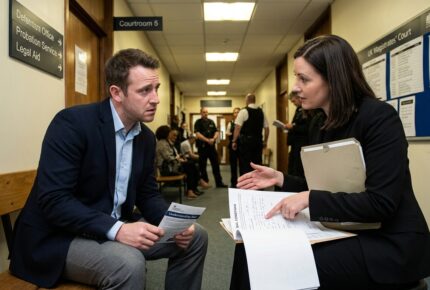
Being accused of a VAT offence can be unsettling, particularly if you have never had any involvement with the criminal justice system before. You may be worried about being held in custody, the impact on your trade or business, and how your family will cope if it affects your liberty and finances. This article will explain what VAT offences involve, what usually happens after arrest, how bail works, and what factors influence whether you are released. It will also outline practical steps you can take, and how a solicitor can support you in seeking bail.
What are VAT offences?
VAT offences cover a range of criminal allegations linked to the dishonest evasion or abuse of Value Added Tax rules. They are often prosecuted under the Value Added Tax Act 1994 or the Fraud Act 2006. In many cases, prosecutions follow lengthy investigations by HM Revenue & Customs (HMRC), sometimes involving dawn raids, seizure of documents, and interviews under caution.
Common examples include submitting false VAT returns, suppressing sales, inflating purchase figures to reclaim more VAT than is due, or participating in so‑called “missing trader” or carousel fraud. Some cases concern organised activity across multiple companies; others involve sole traders or small business owners accused of understating liabilities.
Although VAT offences are non‑violent, they are treated seriously. Allegations frequently involve substantial sums of money, complex financial records, and claims of deliberate dishonesty. That seriousness can affect how decisions about bail are approached, particularly where large losses to the public purse are alleged.
What happens after an arrest for VAT offences?
If you are arrested on suspicion of a VAT offence, you will be taken to a police station or, in some cases, a specialist HMRC facility. You have the right to free and independent legal advice. Before any interview takes place, the prosecution must provide an outline of the allegation and the evidence they rely on at that stage.
The investigation may already have been running for months or even years. Officers might have seized computers, bank statements, accounting records, and correspondence. During the interview, questions are likely to focus on your role in the business, your knowledge of VAT returns submitted, and any transactions thought to be suspicious.
After an interview, one of three things usually happens: you are charged, you are released on bail while enquiries continue, or you are released under investigation. In more serious cases, particularly where there is concern about interference with evidence or dissipation of assets, the police may initially refuse bail and keep you in custody to appear before the Magistrates’ Court.
What is the difference between bail and being released under investigation?
Bail means you are released from custody subject to conditions and with a requirement to return to the police station or attend court on a specified date. Those conditions are legally binding. If you breach them, you can be arrested again and brought back before the court.
Being released under investigation (RUI) means you are allowed to leave custody without conditions while enquiries continue. There is no fixed return date, although you can later be asked to attend voluntarily or be charged.
For VAT offences, bail is often preferred where investigators believe ongoing oversight is necessary. For example, they may wish to prevent contact with business associates or restrict access to certain financial systems. RUI may be used where the perceived risk is lower, but it offers you less clarity about timescales.
Can I get bail for VAT offences?
In many VAT offences cases, bail is granted. These are non‑violent allegations, and defendants are often people with established addresses, families, and ongoing businesses. However, bail is never automatic. The decision depends on whether the police or court consider there are substantial grounds to refuse it.
If you are charged, the custody officer must consider bail first. If they refuse, you will be brought before the Magistrates’ Court, usually the next working day. The court will then reconsider the issue independently.
The law starts from a general right to bail, but that right can be displaced. In VAT cases involving very large sums, international transactions, or alleged links to organised networks, the prosecution may argue there is a risk of flight or interference with witnesses. Each case is looked at on its own facts.
What bail conditions might I face for vat offences?
Bail conditions in VAT offences cases are designed to manage perceived financial and evidential risks rather than risks of violence. Conditions must be proportionate and tailored to the concerns identified.
You might be required to comply with conditions such as:
- Residing at a specified address and notifying police of any proposed change
- Surrendering your passport and not applying for new travel documents
- Not contacting named co‑directors, employees, or other suspects
- Not accessing or using certain business bank accounts or accounting software
- Reporting to a local police station at set intervals
In some higher‑value cases, financial restrictions may be imposed to prevent the movement of assets. The court’s aim is not to punish you before trial, but to ensure you attend court and do not undermine the investigation.
What factors do police and courts consider when deciding bail for VAT offences?
When deciding whether to grant bail, the police or court consider whether there are substantial grounds to believe you would fail to surrender, commit further offences, or interfere with witnesses or the course of justice.
In VAT offences, specific factors often include the scale of the alleged fraud, the strength of the evidence gathered so far, and whether the case involves cross‑border transactions. If investigators believe funds have been moved overseas, that can increase concern about flight risk.
Your personal circumstances also matter: your age, previous convictions (if any), employment history, family ties, and record of complying with previous court orders. A person with no prior convictions and a stable home life will generally be viewed differently from someone with a history of dishonesty offences or breaches of bail.
The court may also consider the stage of the investigation. If most evidence has already been secured through seized records and digital downloads, the perceived risk of interference may be lower than in a case where key witnesses are yet to be interviewed.
What can I do to improve my chances of being granted bail?
While the final decision rests with the police or court, there are practical steps that can strengthen a bail application. Preparation and credible reassurance are important.
You should be ready to demonstrate stability, transparency, and a willingness to comply with restrictions. This may involve providing documentation or offering workable alternatives to address specific concerns raised by the prosecution.
- Provide proof of a fixed address and length of residence
- Offer to surrender your passport voluntarily
- Identify a responsible person willing to act as a surety if appropriate
- Show that business records and devices have already been handed over
- Confirm your understanding of, and willingness to follow, any proposed conditions
It is important not to contact co‑suspects or attempt to “tidy up” business affairs in a way that could be misinterpreted. Seemingly innocent actions can sometimes be viewed with suspicion once an investigation has begun.
How can a solicitor help me secure bail for VAT offences?
An experienced criminal defence solicitor plays a central role in bail applications. From the outset, they can make representations at the police station, challenging any suggestion that detention is necessary and proposing realistic, proportionate conditions instead.
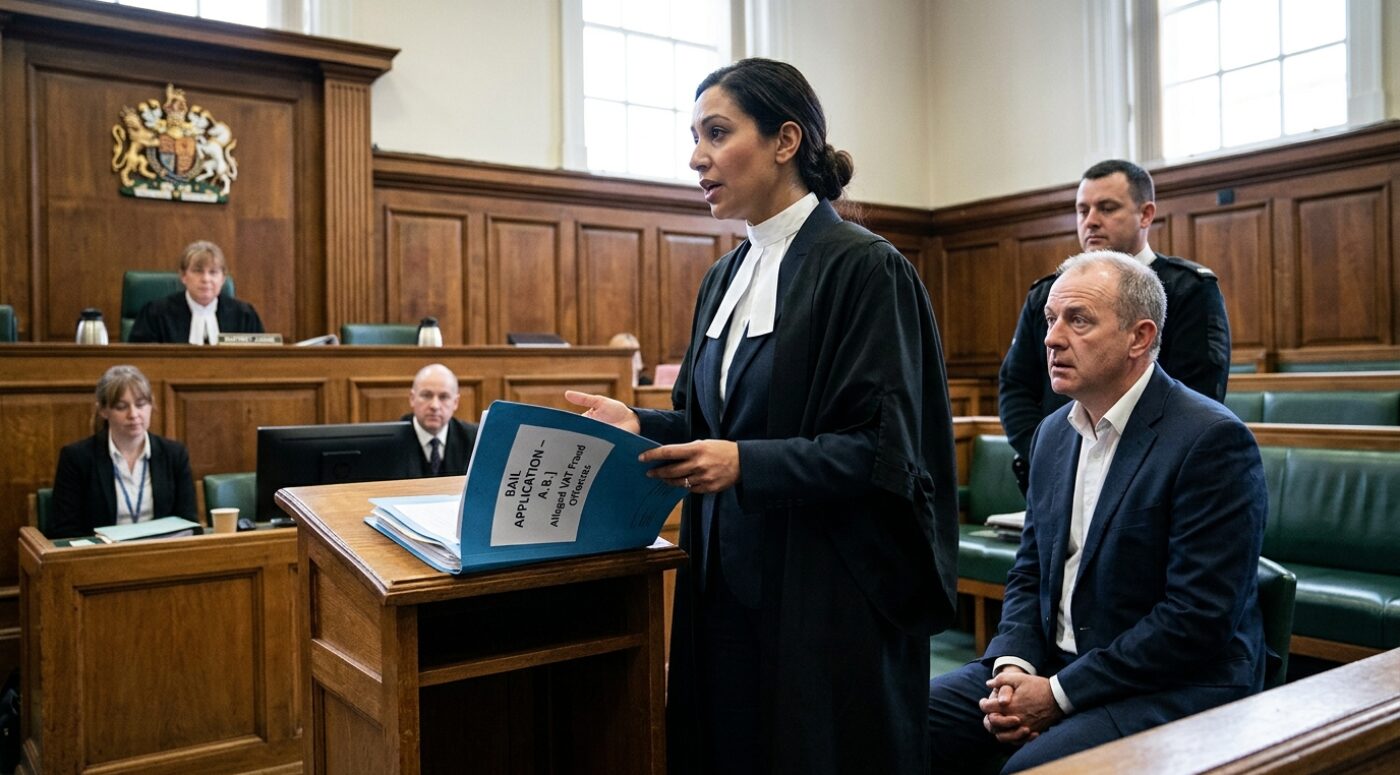
If the matter goes before the Magistrates’ Court, your solicitor will prepare a structured bail argument. That may include addressing the strength of the evidence, highlighting weaknesses in the prosecution’s risk assessment, and presenting verified information about your personal circumstances.
In complex VAT cases, understanding the financial background is essential. A solicitor who is familiar with HMRC investigations can explain the context of transactions, clarify your role in the business, and prevent assumptions from going unchallenged. If bail is refused, they can advise you on renewing the application where circumstances change.
Where to get more help
Allegations of VAT offences are taken seriously and can carry significant personal and professional consequences. Early, informed legal advice can make a meaningful difference to how your case progresses, including decisions about bail. You need guidance that is discreet, strategic, and grounded in real experience of HMRC prosecutions. The team at Stuart Miller Solicitors can assess your situation, advise you on your options, and represent you robustly at the police station or in court. For clear, practical advice tailored to your circumstances, get in touch to book a free, no obligation consultation.
OUR COMMITMENTS TO YOU:
-
Responsive
A legal expert will consult you within 24 hours of making an enquiry.
-
Empathetic
We will always treat you with trust, understanding and respect.
-
Specialised
Your case will be handled by an expert who specialises in your type of offence.
-
Proactive
We will take early action to end proceedings as soon as it is practically and legally possible to do so.
-
Engaged
You will be kept updated on your case at all times. We will provide a named contact available to answer your questions.
-
Caring
We understand this is a difficult and stressful time for you and your family. Our team will support you every step of the way.
-
Tenacious
We will never give up on your case. We fight tirelessly to get you the best possible outcome.
Google Rating
Based on 516 reviews
×