
-

Top 1% of Defence Law Firms
-

Defended over 50,000 Cases
-

5 star google reviews
-

40 Years of Criminal Law Expertise
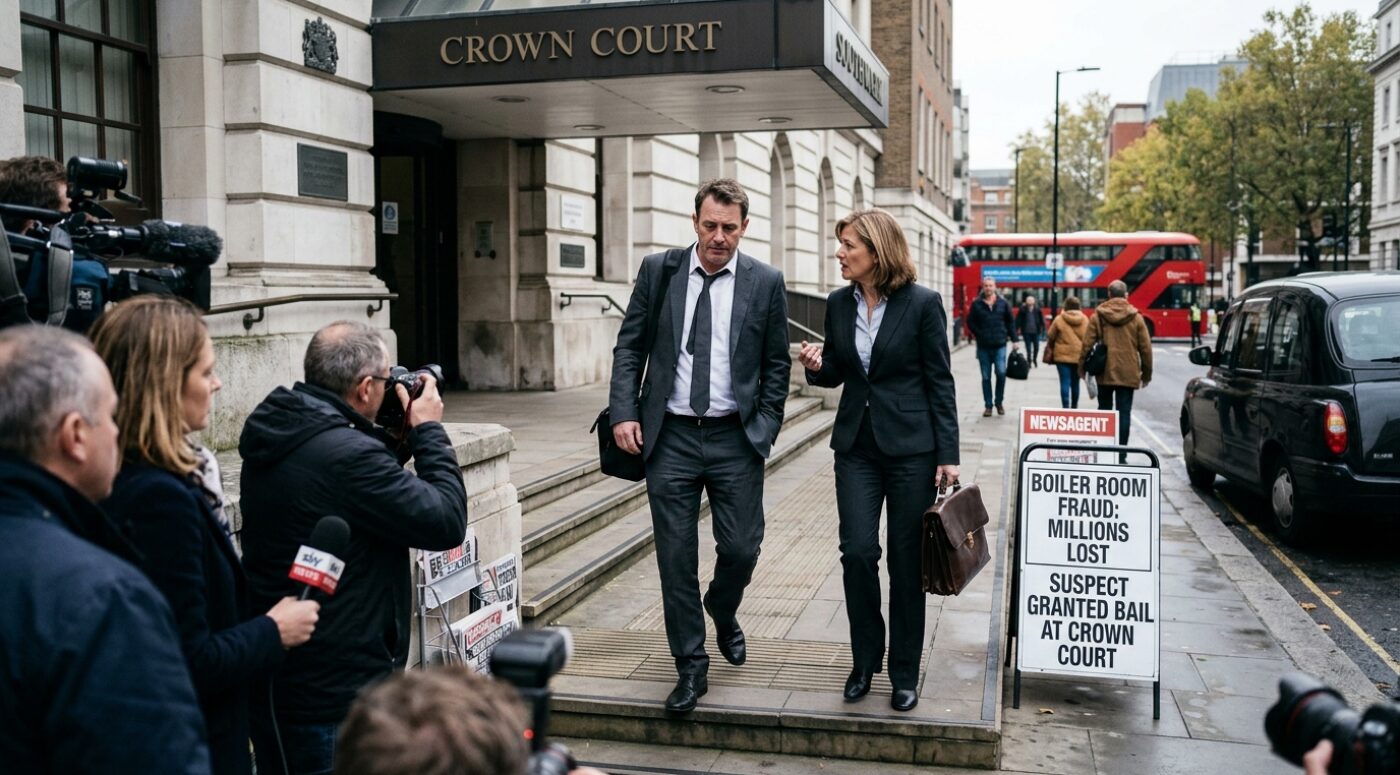
Boiler room fraud involves high-pressure sales operations that typically promote investments in worthless or non-existent shares, commodities, or other financial products. Victims are often targeted through unsolicited calls, emails, or online approaches, with the aim of persuading them to part with money quickly. Allegations of boiler room fraud can be particularly serious because they often involve large sums, multiple victims, and cross-border elements. Those under investigation may face questions about arrest, bail, and restrictions on financial activity while the case is ongoing. This article explains how boiler room fraud is investigated, how bail decisions are considered, and what steps can be taken to protect your position during an inquiry.
What is boiler room fraud?
Boiler room fraud is a type of investment fraud. It usually involves the cold‑calling of members of the public and persuading them to invest in shares, bonds or other financial products that are misleadingly described, grossly overvalued or entirely fictitious. The approach is often high‑pressure, presenting the opportunity as time‑limited or “exclusive”.
In England and Wales, allegations of boiler room fraud are commonly prosecuted under the Fraud Act 2006, particularly fraud by false representation or fraud by abuse of position. Depending on the facts, there may also be allegations of conspiracy to defraud, money laundering under the Proceeds of Crime Act 2002, or regulatory breaches linked to unauthorised investment activity.
Although boiler room fraud is a non‑violent offence, it is treated as serious. Investigations are frequently complex, involve large volumes of evidence, and may allege multiple victims or significant financial loss. That context is important when considering bail.
What happens after an arrest for boiler room fraud?
If you are arrested on suspicion of boiler room fraud, the police will usually conduct a lengthy interview under caution. You may be arrested at home or business premises, sometimes alongside searches for documents, electronic devices, or financial records. In some cases, the arrest forms part of a wider operation involving multiple suspects.
After the interview, the police have several options. They may release you on bail, release you under investigation (RUI), or in limited situations keep you in custody to consider charging you. Because fraud investigations can take months or longer, it is common for a decision on charge to be delayed.
At this stage, decisions are not about guilt. The focus is on whether the investigation can continue while you are in the community, and what safeguards may be needed to manage perceived risks.
What is the difference between bail and being released under investigation?
Being released on bail means you are free to leave custody but subject to conditions. You will be given a return date to attend the police station, and you must comply with any restrictions imposed. Breaching bail conditions is a criminal offence and can result in re‑arrest.
Release under investigation means you are not subject to conditions and do not have a fixed return date, although the investigation continues. This can feel less restrictive, but it also offers fewer protections. There is no oversight of how long the investigation takes, and you may be re‑arrested without warning.
In complex fraud cases, bail is sometimes used to impose controls where the police believe there is a risk of interference with evidence, contact with witnesses, or ongoing financial activity.
Can I get bail for boiler room fraud?
Yes, bail is possible in boiler room fraud cases, but it is not guaranteed. The police and courts must decide whether bail is appropriate based on the specific circumstances of your case. There is a general presumption in favour of bail, but that presumption can be displaced where risks are identified.
Fraud allegations often raise concerns about access to financial systems, use of phones or email, overseas connections, or coordination with others. These factors do not automatically prevent bail, but they often lead to stricter conditions.
If the allegation involves substantial sums of money, a large number of alleged victims, or an organised structure, decisions about bail are likely to be more cautious. That said, many individuals accused of boiler room fraud are successfully released on bail with appropriate safeguards in place.
Practical steps can improve the likelihood of bail being granted. This may include agreeing to restrictions on financial activity, surrendering passports, reporting regularly to a police station or bail supervisor, and avoiding contact with co-defendants or potential victims. Demonstrating stability through accommodation, employment, or family ties, and providing full disclosure of your role and responsibilities in the business, can also reassure the court that any risks of absconding, reoffending, or interfering with evidence can be effectively managed.
What bail conditions might I face for boiler room fraud?
Bail conditions in boiler room fraud cases are designed to limit the risk of further alleged offending and protect the integrity of the investigation. They are tailored to the allegations and your personal circumstances.
Common conditions may include:
- Restrictions on contacting named individuals, including co‑suspects or potential witnesses
- Limits on the use of telephone lines, email accounts, or social media platforms
- A prohibition on engaging in investment solicitation or financial advisory activities
- Requirements to reside at a particular address and notify police of any change
- Surrender of passport and restrictions on travel
- Reporting to a police station at set intervals
Conditions can be intrusive, particularly where they affect your work or access to finances. They must, however, be proportionate. Unnecessary or overly broad conditions can be challenged with the right legal support.
What factors do police and courts consider when deciding bail for boiler room fraud?
Decisions about bail are discretionary and fact‑specific. In boiler room fraud cases, the following factors are commonly considered:
- Risk of further offending: Whether there is concern that alleged fraudulent activity could continue if you are released without restrictions.
- Interference with witnesses or evidence: This includes access to documents, digital material, or contact with others involved.
- Failure to surrender: The likelihood that you will return to custody or court when required, including any overseas links.
- Seriousness of the allegation: Higher value or more complex cases can attract closer scrutiny.
- Previous history: Past convictions, especially for dishonesty, or previous breaches of bail.
- Personal circumstances: Stable accommodation, employment, family ties, and health issues can all be relevant.
No single factor decides the issue. The overall picture matters, and mitigating features can balance perceived risks.
What can I do to improve my chances of being granted bail?
There are practical steps that can help present you as a suitable candidate for bail. Much of this depends on early preparation and clear communication.
Providing accurate details of your address and personal circumstances is essential. As mentioned, demonstrating stability – such as long‑term residence, family responsibilities, or legitimate employment – can assist in addressing concerns about absconding.
Where appropriate, it may help to propose sensible conditions rather than simply opposing restrictions. For example, agreeing to limits on business activity or digital communications can reassure decision‑makers that risks are manageable.
Above all, having legal representation at the earliest stage ensures that your position is clearly and responsibly put forward, and that unnecessary conditions are challenged before they become entrenched.
How can a solicitor help me secure bail for boiler room fraud?
A solicitor plays a central role in bail decisions, particularly in complex fraud cases. From the outset, your solicitor can make representations to the police about why bail is appropriate and what conditions, if any, would be proportionate.
They can:
- Analyse the alleged risks and address them directly
- Propose tailored bail conditions that protect your liberty while satisfying investigative concerns
- Challenge assumptions about your role, access to funds, or alleged influence over others
- Apply to vary or remove bail conditions where they are excessive or outdated
- Make a bail application to the court if bail is refused by the police
In financial crime cases, understanding the underlying business arrangements and evidence is crucial. A solicitor experienced in serious fraud can present your case in a way that is grounded, credible, and focused on safeguarding your freedom during the investigation.
Where to get more help
If you have been arrested or are under investigation for boiler room fraud, early legal advice from an experienced firm like Stuart Miller Solicitors can make a significant difference. A specialist criminal defence solicitor can assess your position, develop a bail strategy, and act quickly to challenge unnecessary restrictions. With experience in serious financial crime, they can offer practical support and clear guidance at a time of uncertainty. Contact us today for a free no obligation consultation about your next steps.
OUR COMMITMENTS TO YOU:
-
Responsive
A legal expert will consult you within 24 hours of making an enquiry.
-
Empathetic
We will always treat you with trust, understanding and respect.
-
Specialised
Your case will be handled by an expert who specialises in your type of offence.
-
Proactive
We will take early action to end proceedings as soon as it is practically and legally possible to do so.
-
Engaged
You will be kept updated on your case at all times. We will provide a named contact available to answer your questions.
-
Caring
We understand this is a difficult and stressful time for you and your family. Our team will support you every step of the way.
-
Tenacious
We will never give up on your case. We fight tirelessly to get you the best possible outcome.
Google Rating
Based on 506 reviews
×